Biology · Genetics and Evolution · Chapter notes
Genetics and Evolution · Class 12 NEET Notes
Complete Class 12 notes on Molecular Basis of Inheritance and Evolution, the unit that carries more NEET marks than any other. Eleven diagrams, trap alerts, a quick review of what NEET repeats, and a fact sheet.
In short
Molecular Basis of Inheritance and Evolution together carry more NEET marks than any other unit. The chain runs from the experiments that proved DNA is the genetic material, through its structure, packaging, replication, transcription and translation, to the lac operon, DNA fingerprinting, and the evidence and mathematics of evolution.
Contents
- ·How to Use These Notes
- 1The Search for the Genetic Material Griffith to Hershey and Chase
- 2DNA Structure every number that gets examined
- 3Packaging DNA nucleosome to chromatin
- 4Replication semiconservative, and why one strand lags
- 5Transcription and RNA Processing
- 6The Genetic Code and Translation 64 codons and their rules
- 7Regulation: The Lac Operon a switch that reads the food supply
- 8Genome and DNA Fingerprinting
- 9Origin of Life Oparin, Haldane, Miller and Urey
- 10Evidence for Evolution homology, fossils, and melanism
- 11Natural Selection three ways it reshapes a population
- 12Hardy-Weinberg Equilibrium
- 13Quick Review: What NEET Repeats the students' request, in one place
- ★Genetics & Evolution · Fact Sheet
How to Use These Notes
- This unit is the highest scoring block in NEET Biology. Genetics and Evolution together carry more questions than any other unit.
- Blue marks a defining fact. Red marks a trap or a number examiners love.
- Most of the text is in points. Read the point, then study the drawing beside it.
- Sections 1 to 8 cover Molecular Basis of Inheritance. Sections 9 to 12 cover Evolution.
- Section 13 is a separate quick-review list of what NEET keeps coming back to. It is deliberately at the end, so you read the chapter properly first.
- Several of you asked for the repeated questions to be marked beside each point.
- We have put them in a separate section instead, on purpose.
- If the tags sit inline, the eye jumps to them and skips everything else. You end up revising a list, not learning a chapter.
- So: read Sections 1 to 12 properly. Then use Section 13 the night before.
The Search for the Genetic Material
- For a long time nobody knew whether protein or DNA carried the information.
- Griffith (1928) worked with two strains of pneumococcus. The S strain has a capsule and is virulent. The R strain has none and is harmless.
- He found that heat-killed S bacteria, mixed with live R bacteria, killed the mice. Something had passed across. He called this transformation.
- Avery, MacLeod and McCarty (1933 to 1944) repeated it in a test tube and destroyed each molecule in turn. Only destroying DNA stopped transformation.
- Hershey and Chase (1952) used bacteriophages and radioactive labels. This was the experiment that settled the argument.
- Griffith showed that transformation happens. He did not name the molecule.
- Avery and his team identified that molecule as DNA.
- Hershey and Chase proved it, using phage.
- Sulfur-35 labels protein because protein has sulfur and DNA does not. Phosphorus-32 labels DNA because DNA has phosphate and protein does not.
- Swapping those two labels is the single most common error from this section.
- RNA came first and can act as a genetic material, as it does in some viruses.
- But RNA is reactive, so it is easily broken down.
- DNA is chemically more stable, mostly because it lacks the 2' hydroxyl group.
- So RNA kept the catalytic and messenger jobs, and DNA took over storage.
DNA Structure
- A nucleotide has three parts: a nitrogen base, a pentose sugar and a phosphate group.
- Purines are adenine and guanine, and they have two rings. Pyrimidines are cytosine, thymine and uracil, with one ring.
- Watson and Crick built the model in 1953, using Franklin's X-ray photograph.
- The backbone is sugar and phosphate. The bases point inward and pair across.
- A pairs with T using two hydrogen bonds. G pairs with C using three.
- So DNA rich in G and C takes more heat to separate. This is used in the lab all the time.
- The two strands are antiparallel: one runs 5' to 3', the other 3' to 5'.
- Chargaff found A equals T and G equals C in any double-stranded DNA. So (A + G) divided by (T + C) is always 1.
- If adenine is 30% of the bases, then thymine is also 30%.
- That leaves 40% for G and C together, so each is 20%.
- Check the total: 30 + 30 + 20 + 20 = 100.
- Any question giving you one base percentage is asking for exactly this.
Stretch the model, count the base pairs in one turn, and watch the 3.4 nm appear. The four numbers stop being a list to memorise.
Packaging DNA
- Human DNA is about 3.3 billion base pairs long. Laid end to end that is roughly 2 metres.
- It has to fit inside a nucleus about 10 micrometres across. So it must be packed.
- DNA wraps around a histone octamer to form a nucleosome.
- The octamer is two each of H2A, H2B, H3 and H4. About 200 base pairs wrap around it.
- Histone H1 is NOT part of the octamer. It sits outside and links one nucleosome to the next.
- Histones are positively charged because they are rich in lysine and arginine. DNA is negatively charged, so the two bind strongly.
- Euchromatin is loosely packed, stains light, and is active in transcription.
- Heterochromatin is tightly packed, stains dark, and is inactive.
- Non-histone chromosomal proteins give further levels of packing.
Replication
- Replication is semiconservative. Each new double helix keeps one old strand and one new one.
- Meselson and Stahl (1958) proved it using heavy nitrogen and density gradient centrifugation.
- Taylor showed the same thing in Vicia faba, the faba bean, using radioactive thymidine.
- Helicase unzips the two strands. DNA polymerase then builds the new ones.
- DNA polymerase can only add nucleotides in the 5 prime to 3 prime direction.
- Because the strands are antiparallel, only one of them can be built continuously.
- That one is the leading strand. The other is the lagging strand.
- The lagging strand is made in short pieces called Okazaki fragments, joined by DNA ligase.
- Replication starts at a specific sequence called the origin of replication.
- Replication happens in the S phase of the cell cycle.
- DNA polymerase is a remarkably fast enzyme, and it also proofreads its own work.
- The energy for joining nucleotides comes from the deoxyribonucleoside triphosphate itself, not from a separate ATP molecule.
- That last point appears as a statement-based question surprisingly often.
Transcription and RNA Processing
- Transcription copies one strand of DNA into RNA. Only one strand is copied.
- The strand that is read is the template strand, running 3' to 5'.
- The other strand is the coding strand. It is not copied, but its sequence matches the RNA, with U in place of T.
- RNA polymerase does the work. In bacteria one enzyme makes all three RNA types.
- Eukaryotes have three RNA polymerases. I makes rRNA, II makes hnRNA (the mRNA precursor), III makes tRNA and small RNAs.
- Eukaryotic genes are split genes: coding exons interrupted by non-coding introns.
- Splicing removes the introns and joins the exons.
- The transcript also gets a cap at the 5' end and a poly-A tail at the 3' end.
- Only after all this does it become mature mRNA and leave the nucleus.
- In bacteria there is no nucleus, so transcription and translation happen at the same time and place.
- Split genes, splicing, capping and tailing are eukaryotic only.
- So a bacterial mRNA can be translated while it is still being made.
- Any question mentioning introns or splicing is about a eukaryote.
The Genetic Code and Translation
- The code is read in triplets. Four bases in groups of three give 4³ = 64 codons.
- 61 codons code for amino acids. 3 are stop codons: UAA, UAG and UGA.
- AUG is the start codon, and it also codes for methionine. So it does two jobs.
- Khorana, Nirenberg and Holley worked out the code, and shared the Nobel Prize for it.
- Degenerate: most amino acids have more than one codon. This is not the same as ambiguous.
- Unambiguous: each codon specifies one amino acid only, and never two.
- Nearly universal: the same code works from bacteria to humans, with tiny exceptions such as in mitochondria.
- Non-overlapping and comma-less: it is read straight through, three at a time.
- Degenerate and ambiguous are opposites. A codon never has two meanings, but an amino acid often has several codons.
- tRNA is the adapter. It has an anticodon at one end and carries an amino acid at the other.
- Ribosomes are the factory. The small subunit binds mRNA, and the large one joins the amino acids.
- There is no tRNA for the stop codons, which is exactly why translation stops there.
- The mRNA has untranslated regions (UTRs) at both ends that are not translated.
- A change of one base that swaps one amino acid is a point mutation. Sickle cell anaemia is the standard example: glutamate becomes valine.
- Inserting or deleting bases in threes keeps the reading frame intact.
- Inserting or deleting one or two bases shifts the whole reading frame after that point, so everything downstream is wrong.
- That is why frameshift mutations are usually far more damaging.
Regulation: The Lac Operon
- A bacterium does not make an enzyme it does not need. It switches genes on only when the food arrives.
- Jacob and Monod described the lac operon in E. coli.
- An operon is a group of genes controlled together, from one promoter.
- Here lactose is the substrate, and it acts as the inducer.
- i gene makes the repressor protein. It is a regulator, not part of the operon proper.
- p is the promoter, where RNA polymerase binds.
- o is the operator, the switch that the repressor sits on.
- z gives beta-galactosidase, y gives permease, a gives transacetylase.
- One mRNA is made for all three structural genes together. That is what polycistronic means.
- The repressor is made all the time, whether lactose is there or not.
- Lactose does not switch the gene on directly. It switches the repressor off.
- So this is negative regulation: the default state is blocked, and the inducer removes the block.
- Beta-galactosidase itself splits lactose into glucose and galactose, which is the point of the whole system.
Genome and DNA Fingerprinting
- The Human Genome Project ran from 1990 to 2003. The genome is about 3164.7 million base pairs.
- It found roughly 20500 genes, far fewer than the 80000 to 140000 people had expected.
- Chromosome 1 has the most genes (2968). The Y chromosome has the fewest (231).
- About 1.4 million single base differences, called SNPs, were located.
- Less than 2% of the genome codes for protein. Much of the rest is repetitive.
- DNA fingerprinting was developed by Alec Jeffreys.
- It compares VNTRs, short sequences repeated a variable number of times.
- The number of repeats differs between people, so the banding pattern is individual.
- The steps are: isolate DNA, cut with restriction enzymes, separate by electrophoresis, blot onto a membrane, hybridise with a probe, then detect by autoradiography.
- Identical twins are the exception. Their fingerprints match, because their DNA does.
Origin of Life
- The universe is about 20 billion years old. The Earth formed about 4.5 billion years ago.
- Life appeared roughly 3.5 billion years ago, in water.
- Panspermia said life arrived from space as spores. It is mentioned, not accepted.
- Oparin and Haldane proposed that life arose from simple chemicals, in conditions with no free oxygen. This is chemical evolution.
- Miller and Urey used methane, ammonia, hydrogen and water vapour at 800 degrees Celsius.
- They passed an electric discharge through it for a week, to imitate lightning.
- They obtained amino acids, and later similar work gave sugars, bases, pigments and fats.
- This showed chemical evolution CAN happen. It did not prove that it DID. That distinction is a favourite assertion-reason question.
Evidence for Evolution
- Fossils give a direct record. The deeper the rock layer, the older the fossil in it.
- Homologous organs have the same basic structure but do different jobs.
- Analogous organs have different structures but do the same job.
- Homology points to a common ancestor, so it shows divergent evolution.
- Examples: the forelimbs of humans, whales, bats and cheetahs. In plants, the thorn of Bougainvillea and the tendril of Cucurbita.
- Analogy comes from a shared way of life, so it shows convergent evolution.
- Examples: the wings of butterflies and birds, the eyes of octopus and mammals, and the flippers of penguins and dolphins.
- In plants, the sweet potato is a root and the potato is a stem, yet both store food.
- Before industry in England, the white winged moth was common and the dark moth was rare.
- After industry, soot darkened the tree trunks. Now the dark moth was better hidden.
- The dark form became common and the white form became rare.
- No new moth appeared. The variation was already there, and the environment changed which one survived.
- This is the clearest short example of natural selection acting in real time.
Natural Selection
- Darwin's two ideas were branching descent and natural selection.
- More young are produced than can survive. They vary. The ones that fit best leave more offspring.
- Fitness in biology means reproductive success, not strength.
- Lamarck said organs change through use and disuse, and that these changes pass on. This was rejected: changes to the body during life are not inherited.
- Stabilising selection favours the average and removes both extremes. Human birth weight.
- Directional selection favours one extreme and shifts the whole population. Industrial melanism.
- Disruptive selection favours both extremes and splits the population in two.
- Selection does not create variation. Mutation and recombination create it. Selection only decides which variants persist.
- Mutation is the ultimate source of all new variation.
- Recombination during meiosis shuffles what already exists into new combinations.
- Gene flow brings variants in from another population.
- Genetic drift changes frequencies by chance alone, and it matters most in small populations.
- The founder effect is drift acting when a few individuals start a new population.
Hardy-Weinberg Equilibrium
- This describes a population in which allele frequencies are not changing.
- So it is a baseline. It tells you what to expect when no evolution is happening.
- p is the frequency of the dominant allele and q the recessive one, and p + q = 1.
- The genotype frequencies then follow: p² + 2pq + q² = 1.
- Five conditions must all hold: no mutation, no gene flow, no genetic drift, no natural selection and random mating.
- In the real world at least one is always broken. So the equilibrium is a model, not a fact.
- That is exactly why it is useful. Any drift away from these values measures evolution.
- Worked example: if a recessive disease affects 1 in 10000, then q² = 0.0001 and q = 0.01. So p = 0.99, and carriers are 2pq = 0.0198, which is about 2 in 100.
- p and q are allele frequencies.
- p², 2pq and q² are genotype frequencies.
- Carriers are 2pq, not q. This mix-up is the most common error in Hardy-Weinberg numericals.
- Always start from the recessive phenotype, because that alone gives you q² directly.
Quick Review: What NEET Repeats
Several of you asked for the repeated questions to be marked. Here they are, gathered in one place rather than scattered through the notes. Cover the gold band and test yourself.
- These are grouped by how reliably the pattern returns, not by a single year.
- A question pattern matters more than a year number, because the wording changes but the idea does not.
- Use this the night before. It is not a substitute for the chapter.
- If you can answer all of these without looking, this unit is safe.
Which experiment proved that DNA, and not protein, is the genetic material, and which isotopes were used?
In Griffith's experiment, what happened when heat-killed S bacteria were mixed with live R bacteria?
Why is DNA a better store of information than RNA?
Give the pitch, the base pairs per turn, the rise per base pair and the diameter of B-form DNA.
If adenine is 30 percent of the bases in a double-stranded DNA, what percentage is guanine?
How many hydrogen bonds hold A to T, and G to C?
Which histone is not part of the nucleosome octamer?
Which chromatin is transcriptionally active, and how does it stain?
Why is one strand made in fragments during replication?
Who proved semiconservative replication, and in what organism was it later confirmed?
How many codons are there in total, how many code for amino acids, and which are the stop codons?
What is meant by the code being degenerate, and how is that different from ambiguous?
Which features of RNA processing are found only in eukaryotes?
In the lac operon, what does lactose actually do?
Name the products of the z, y and a genes.
How many base pairs and how many genes did the Human Genome Project report?
What is compared in DNA fingerprinting, and for whom does it fail to distinguish?
What gases did Miller and Urey use, and what did the experiment prove?
Distinguish homologous and analogous organs, with one example of each.
What did industrial melanism in England demonstrate?
Give the two standard examples of adaptive radiation.
Name the three types of natural selection and what each favours.
Does natural selection create variation?
State the five conditions required for Hardy-Weinberg equilibrium.
If a recessive condition affects 1 in 10000 people, what fraction of the population are carriers?
Give the brain sizes of Homo habilis, Homo erectus and the Neanderthals.
★ Genetics & Evolution · Fact Sheet
Every formula for revision day. Print this page alone.
WHO PROVED WHAT
Griffith: transformation happensAvery: the molecule is DNA
Hershey-Chase: proved it.
THE FOUR DNA NUMBERS
3.4 nm per turn10 base pairs per turn
0.34 nm per bp, 2 nm wide.
BASE PAIRING
A to T: 2 hydrogen bondsG to C: 3 hydrogen bonds
A=T and G=C (Chargaff).
NUCLEOSOME
200 bp on a histone octamer2 each of H2A, H2B, H3, H4
H1 is the linker, outside.
REPLICATION
Semiconservative (Meselson-Stahl)Polymerase builds 5' to 3' only
Okazaki fragments, then ligase.
EUKARYOTE EXTRAS
Split genes and splicing5' cap and poly-A tail
Three RNA polymerases.
GENETIC CODE
64 codons, 61 code amino acidsStop: UAA, UAG, UGA
AUG starts and codes Met.
CODE PROPERTIES
Degenerate but UNAMBIGUOUSNon-overlapping, comma-less
Nearly universal.
LAC OPERON
i p o z y aLactose is the INDUCER
Negative regulation.
HUMAN GENOME
3164.7 million base pairsAbout 20500 genes
Chr 1 most, Y fewest.
HOMOLOGY
Homologous: divergentAnalogous: convergent
Adaptive radiation: finches.
HARDY-WEINBERG
p + q = 1, p² + 2pq + q² = 1Carriers are 2pq, not q
Five conditions, all required.
Before the exam
What the paper actually asks from this chapter
- PYQ analysisNEET PYQ: 89 questions from Molecular Basis of Inheritance, analysed
- PYQ analysisNEET PYQ: 52 questions from Principles of Inheritance, analysed
Read next
More biology notes
Now play it.
Reading a chapter and understanding it are different things. In the app this chapter becomes a game you play, a short read, then practice that tests you at every step. A full chapter, understood, in 45 to 60 minutes. Free to start.
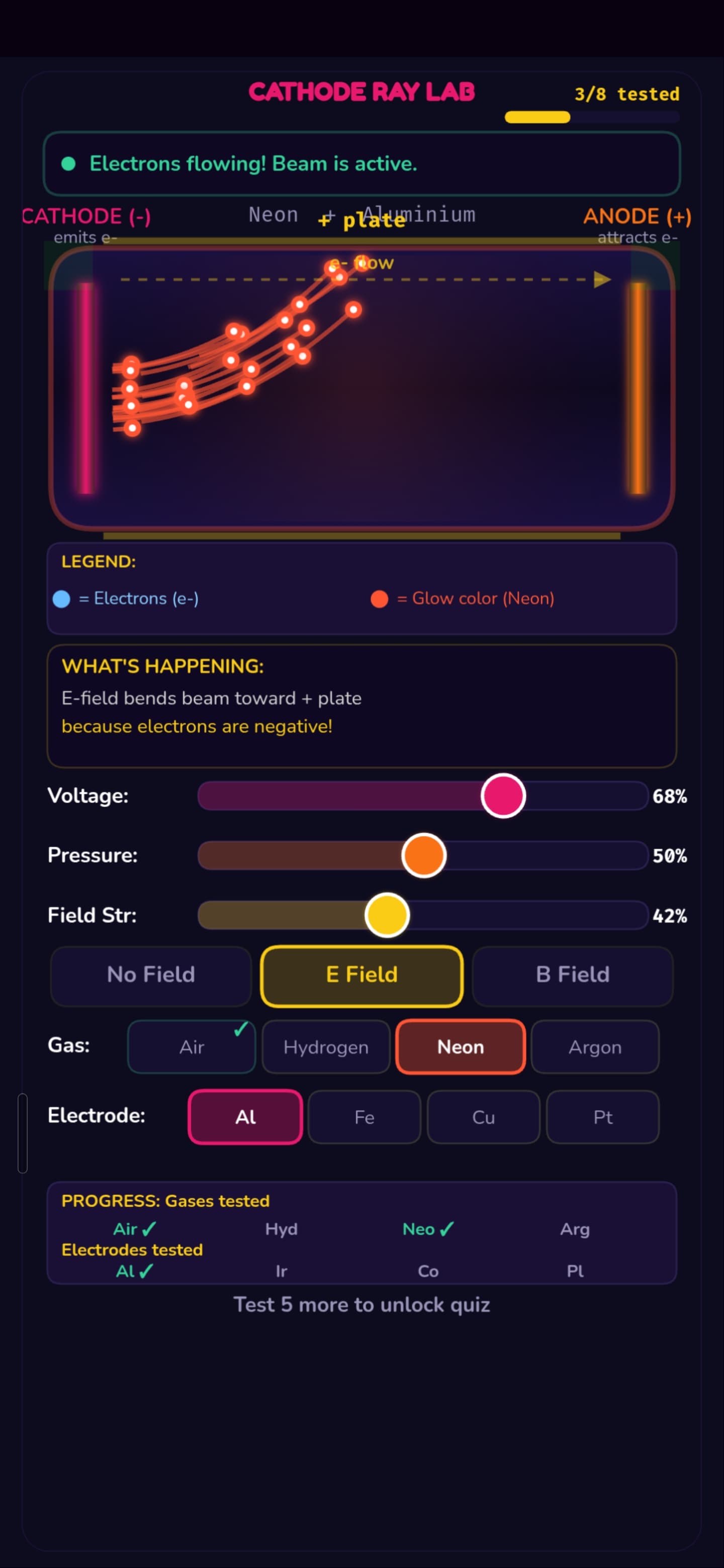
- PlayA game built for the concept
- ReadThe short NCERT explainer
- PracticeTimed, until it sticks
Still stuck at 11pm? TarQPro reads the answer you got wrong and teaches the idea behind it, not just the right option.