Biology · Biotechnology · Chapter notes
Biotechnology and its Applications · Class 12 NEET Notes
Biotechnology and its Applications Class 12 notes for NEET: Bt cotton, RNAi, human insulin, ADA gene therapy, transgenic animals, biopiracy, 14 worked questions.
Every Class 11 and 12 chapter in the app: a game to play, a short read, then questions that check you. Free to start

In short
Bt crops make an insect toxin that only becomes active in the alkaline gut of the insect. RNA interference silences a pest's gene. Tobacco plants protected this way kill the nematode that feeds on them. Human insulin is now made in E. coli, as separate A and B chains joined later. The first gene therapy (1990) treated ADA deficiency. It was not a permanent cure. Transgenic animals help study disease, make medicines and test safety. Biopiracy and patents raise ethical questions.
Contents
- ·How to Read This Set and what NEET 2026 asks
- 01Biotechnology in Agriculture tissue culture and GM crops
- 02Bt Crops a toxin the gut switches on
- 03Pest-Resistant Plants: RNA Interference two RNAs silence the pest
- 04Biotechnology in Medicine: Human Insulin two chains, two cultures
- 05Recombinant Vaccines (from NCERT Chapter 7) yeast as the factory
- 06Gene Therapy ADA, 1990, and the catch
- 07Molecular Diagnosis PCR, probes and ELISA
- 08Transgenic Animals mice, Rosie and safety tests
- 09Ethical Issues GEAC, patents, biopiracy
- 10Quick Review: What NEET Repeats 20 cards for the last week
- ★Biotechnology and its Applications · Fact Sheet
How to Read This Set
- This chapter is a set of case studies. For each one, learn three things: the problem, the trick, and the catch.
- Many questions here hide one wrong word in a true-looking sentence. Read every statement to the end.
- Orange boxes are traps. Read every one.
- Questions after each section are NEET level. Try each one before reading the answer.
- Insulin and Bt crops gave nearly half the questions in our data. Learn those two sections best.
The NMC syllabus lists: "Application of Biotechnology in health and agriculture: Human insulin and vaccine production, gene therapy; Genetically modified organisms-Bt crops; Transgenic Animals; Biosafety issues-Biopiracy and patents."
- Vaccine production is not in NCERT Chapter 10. It appears in Chapter 7 (Human Health and Disease). Section 05 covers it.
- Stem cell technology appears in the CBSE board syllabus. But NCERT does not teach it, and the NEET 2026 syllabus does not list it. These notes skip it.
- How genes are cut, copied and inserted is Chapter 9. Read those notes first.
In our analysis, two topics gave about 45% of this chapter's questions: insulin production and Bt crops. Since 2020, multi-statement and match-the-column questions have replaced many plain MCQs.
Biotechnology in Agriculture
Three ways to grow more food
- Agro-chemical based agriculture: uses fertilisers and pesticides.
- Organic agriculture.
- Genetically engineered crop-based agriculture.
- The Green Revolution tripled the food supply. But it was still not enough for a growing population.
- Agrochemicals are too costly for many farmers. More of them also harms the environment.
- So we need crops that need fewer chemicals.
Tissue culture: many plants from one
- Breeding could not keep pace with demand. So another technology, tissue culture, was developed.
- In the 1950s, scientists learnt that whole plants can be regenerated from explants.
- An explant is any part of a plant taken out and grown in a test tube. It grows under sterile conditions, in a special nutrient medium.
- The capacity to grow a whole plant from any cell or explant is called totipotency.
- The nutrient medium must provide:
- a carbon source, such as sucrose
- inorganic salts, vitamins and amino acids
- growth regulators, like auxins and cytokinins.
- Producing thousands of plants this way, in a very short time, is called micropropagation.
- Each of these plants is genetically identical to the original plant. They are somaclones.
- Tomato, banana and apple have been produced on a commercial scale this way.
Virus-free plants
- Even if a plant is infected with a virus, its meristem (apical and axillary) is free of virus.
- So the meristem is removed and grown in vitro. This gives virus-free plants.
- Meristems of banana, sugarcane and potato have been cultured this way.
Somatic hybridisation
- Single cells are isolated from plants, and their cell walls are digested. This leaves naked protoplasts, surrounded only by the plasma membrane.
- Protoplasts from two different varieties, each with a desirable character, are fused. The hybrid protoplast grows into a new plant.
- These plants are somatic hybrids. The process is somatic hybridisation.
- Example: a tomato protoplast was fused with a potato protoplast. The result was the pomato.
- The pomato did not have all the desired characters for commercial use.
- Micropropagation makes identical copies, called somaclones. Somatic hybridisation joins two different plants. Do not swap the two.
Genetically modified organisms (GMOs)
- Plants, bacteria, fungi and animals whose genes have been changed by manipulation are called GMOs.
- GM plants have been useful in five ways:
- More tolerance to abiotic stresses: cold, drought, salt and heat.
- Less reliance on chemical pesticides, through pest-resistant crops.
- Fewer post-harvest losses.
- More efficient mineral use by plants. This stops early exhaustion of soil fertility.
- Better nutritional value. Example: Golden rice, which is Vitamin A enriched rice.
- GM plants can also be tailor-made to supply industry with starches, fuels and medicines.
- Golden rice is enriched in Vitamin A. It is not a pest-resistant crop. Our data lists it as due for a return.
How many of the following are benefits of GM plants listed in NCERT?
Tolerance to drought and salt, reduced use of chemical pesticides, reduced post-harvest losses, more efficient use of minerals, Vitamin A enriched grain, a greater need for chemical fertilisers, a higher need for irrigation water
- Four
- Five
- Six
- Seven
Show answer
Bt Crops
Where the toxin comes from
- Bt toxin comes from the soil bacterium Bacillus thuringiensis (Bt for short).
- Its toxin gene is cloned and expressed in plants. The plants then resist insects without insecticides.
- In effect, the plant makes its own bio-pesticide.
- Examples: Bt cotton, Bt corn, rice, tomato, potato and soyabean.
Which insects it kills
- Some strains of B. thuringiensis make proteins that kill certain insects:
- Lepidopterans: tobacco budworm, armyworm.
- Coleopterans: beetles.
- Dipterans: flies, mosquitoes.
How the toxin works
- At one stage of growth, B. thuringiensis forms protein crystals. These hold the toxic insecticidal protein.
- In the bacterium, the toxin exists as an inactive protoxin. So it does not kill the bacterium itself.
- An insect eats it.
- The alkaline pH of the insect's gut dissolves the crystals and converts the protoxin into its active form.
- The active toxin binds to the surface of the midgut epithelial cells.
- It creates pores in them. The cells swell and burst (lysis).
- The insect dies.
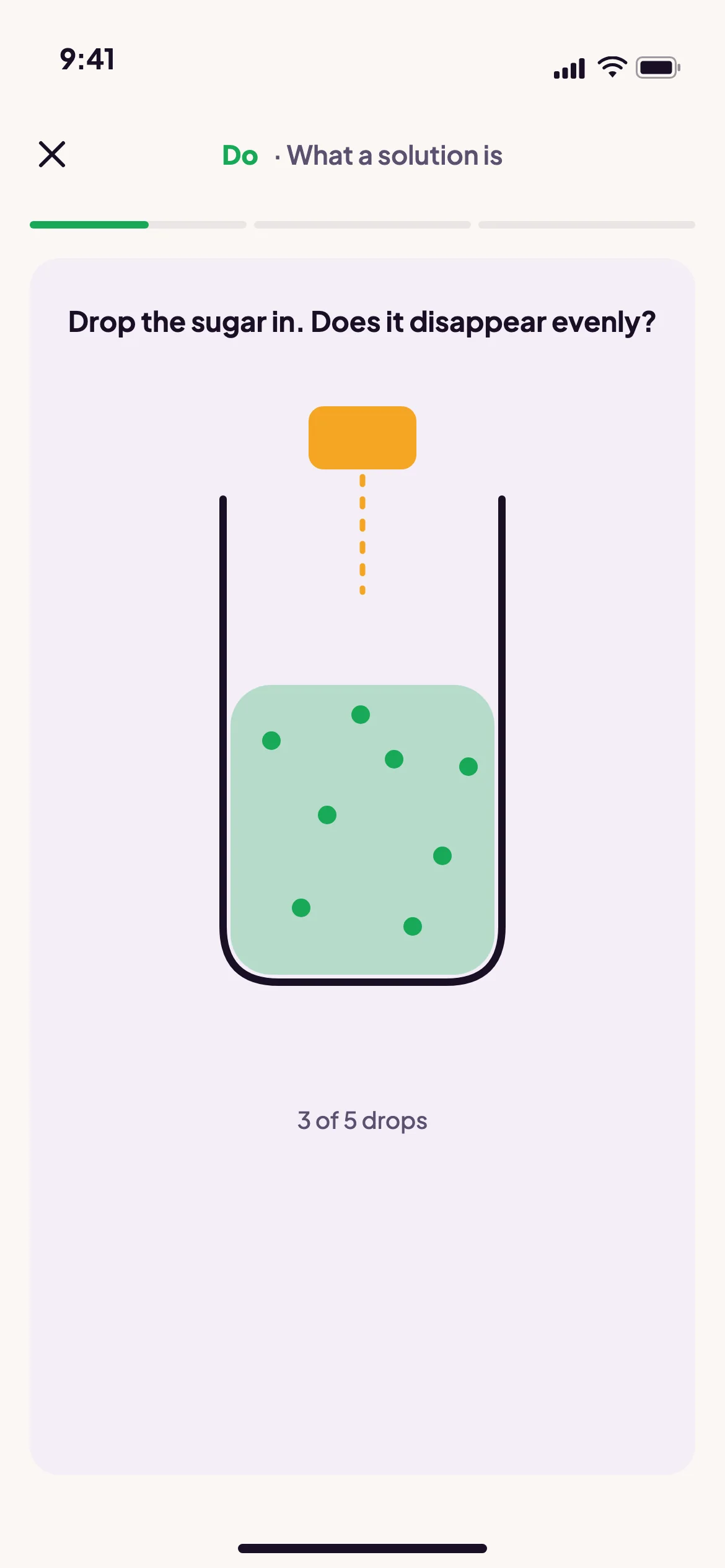
This chapter is a set of short games in the Logic Bloom app.
- The toxin is activated by alkaline pH, not acidic pH. Our data shows this exact fact tested 3 times. Options love to swap "alkaline" for "acidic".
The cry genes
- The Bt toxin gene is called cry.
- Most Bt toxins are specific to one insect group. So the gene chosen depends on the crop and the pest.
| Gene | Controls |
|---|---|
| cryIAc and cryIIAb | Cotton bollworms |
| cryIAb | Corn borer |
- Lower-case italic cry is the gene. Capital, non-italic Cry is the protein it codes for. NCERT uses the same convention.
Assertion (A): The Bt toxin does not kill Bacillus thuringiensis, the bacterium that makes it.
Reason (R): Inside the bacterium, the toxin exists as an inactive protoxin. It becomes active only in the alkaline gut of an insect.
- Both A and R are true and R is the correct explanation of A
- Both A and R are true but R is not the correct explanation of A
- A is true but R is false
- A is false but R is true
Show answer
Arrange these events in the correct order, after an insect eats a Bt cotton leaf.
- (A) The cells of the midgut epithelium swell and burst
- (B) The alkaline gut dissolves the crystals and activates the toxin
- (C) The insect dies
- (D) The active toxin binds to midgut epithelial cells and creates pores
- (B), (A), (D), (C)
- (D), (B), (A), (C)
- (B), (D), (A), (C)
- (A), (B), (D), (C)
Show answer
| Column I | Column II |
|---|---|
| A. cryIAc and cryIIAb | I. Beetles |
| B. cryIAb | II. Cotton bollworms |
| C. Coleopterans | III. Flies and mosquitoes |
| D. Dipterans | IV. Corn borer |
Choose the correct answer from the options given below.
- A-IV, B-II, C-I, D-III
- A-II, B-IV, C-I, D-III
- A-II, B-IV, C-III, D-I
- A-II, B-I, C-IV, D-III
Show answer
Pest-Resistant Plants: RNA Interference
The problem
- The nematode Meloidegyne incognitia infects the roots of tobacco plants.
- It causes a great fall in yield.
The trick: RNA interference (RNAi)
- RNAi happens in all eukaryotic organisms, as a method of cellular defence.
- It silences a specific mRNA.
- A complementary double-stranded RNA (dsRNA) binds to the mRNA and prevents its translation.
- The source of this complementary RNA can be:
- an infection by viruses with RNA genomes, or
- mobile genetic elements (transposons) that replicate through an RNA intermediate.
How it protects tobacco
- Nematode-specific genes were put into the host plant using Agrobacterium vectors.
- This produced both sense and anti-sense RNA in the host cells.
- The two RNAs are complementary. So they paired to form dsRNA.
- The dsRNA started RNAi and silenced the specific mRNA of the nematode.
- The parasite could not survive in a transgenic host that expressed this interfering RNA.
- The plant makes both sense and anti-sense RNA. A statement saying "only anti-sense RNA" is false. RNAi silencing by complementary dsRNA was tested 3 times in our data.
Read these statements about the RNAi method used to protect tobacco.
- (a) RNAi occurs in all eukaryotic organisms as a method of cellular defence.
- (b) A complementary dsRNA binds to a specific mRNA and prevents its translation.
- (c) The nematode Meloidegyne incognitia infects tobacco roots.
- (d) Nematode-specific genes were introduced into the plant using Agrobacterium vectors.
- (e) The host plant made only anti-sense RNA, which silenced the nematode's mRNA.
Choose the correct answer from the options given below.
- (a), (b) and (e) only
- (b), (c), (d) and (e) only
- (a), (c) and (d) only
- (a), (b), (c) and (d) only
Show answer
Read less, play more
Now play it.
In the app a chapter starts as a game you play, then a short read, then questions that check you. A full chapter, understood, in 45 to 60 minutes.
Biotechnology in Medicine: Human Insulin
Why recombinant medicines
- rDNA technology makes safe and more effective drugs in large amounts.
- Recombinant drugs do not cause unwanted immune responses, unlike similar products taken from animals.
- About 30 recombinant therapeutics have been approved worldwide. In India, 12 are being marketed.
The old way and its problem
- Adult-onset diabetes is managed by taking insulin at regular intervals.
- Earlier, insulin came from the pancreas of slaughtered cattle and pigs.
- In some patients, this foreign protein caused allergy or other reactions.
The structure of insulin
- Insulin has two short polypeptide chains, chain A and chain B.
- They are linked together by disulphide bridges.
- In mammals, including humans, insulin is made as a pro-hormone, like a pro-enzyme.
- The pro-hormone has an extra stretch called the C peptide.
- The C peptide is removed during maturation. Mature insulin does not have it.
- So the hard part was getting insulin assembled into its mature form.
The Eli Lilly solution (1983)
- In 1983, Eli Lilly, an American company, prepared two DNA sequences.
- One matched chain A of human insulin. The other matched chain B.
- Each was introduced into plasmids of E. coli.
- The bacteria made chains A and B separately.
- The chains were extracted and combined by creating disulphide bonds. This formed human insulin.
- Because the chains were made separately, there was no C peptide to remove.
Eli Lilly put the whole pro-insulin gene into E. coli and let the bacterium cut out the C peptide.
Bacteria cannot do that maturation step. So the A and B chains were made separately and joined outside the cell.
- Two facts were each tested 3 times in our data. The C peptide is removed. And chains A and B are joined by disulphide bridges, not peptide or hydrogen bonds. The host, E. coli, was tested 2 times.
Read these statements about human insulin.
- (a) It has two polypeptide chains, A and B, linked by disulphide bridges.
- (b) In humans, it is first made as a pro-hormone with an extra C peptide.
- (c) The C peptide stays in the mature insulin molecule.
- (d) In 1983, Eli Lilly introduced DNA for chains A and B into plasmids of E. coli.
- (e) The two chains were produced separately and then joined by disulphide bonds.
Choose the correct answer from the options given below.
- (a), (b) and (c) only
- (b), (c), (d) and (e) only
- (a), (b), (d) and (e) only
- (a), (c) and (e) only
Show answer
Statement I: Eli Lilly made human insulin by expressing the complete pro-insulin gene in E. coli.
Statement II: Mature human insulin does not contain the C peptide.
- Both Statement I and Statement II are true
- Both Statement I and Statement II are false
- Statement I is true but Statement II is false
- Statement I is false but Statement II is true
Show answer
Recombinant Vaccines (from NCERT Chapter 7)
This short section comes from NCERT Chapter 7, Human Health and Disease. The NEET 2026 syllabus names "vaccine production" under this chapter, so it belongs here too.
- rDNA technology lets us make the antigenic polypeptides of a pathogen in bacteria or yeast.
- Vaccines made this way can be produced on a large scale. So more people can be immunised.
- Example: the hepatitis B vaccine is produced from yeast.
- The vaccine contains a protein of the pathogen, not the pathogen. The yeast only acts as the factory.
Statement I: The hepatitis B vaccine is produced from yeast using recombinant DNA technology.
Statement II: A recombinant vaccine contains live, weakened hepatitis B viruses grown inside yeast.
- Both Statement I and Statement II are true
- Both Statement I and Statement II are false
- Statement I is true but Statement II is false
- Statement I is false but Statement II is true
Show answer
Gene Therapy
What it is
- Gene therapy is a set of methods to correct a gene defect diagnosed in a child or embryo.
- Genes are inserted into a person's cells and tissues to treat a disease.
- A normal gene is delivered to take over the job of the non-functional gene.
The first case (1990)
- The first clinical gene therapy was given in 1990.
- The patient was a 4-year-old girl with adenosine deaminase (ADA) deficiency.
- ADA is an enzyme crucial for the immune system to work.
- The disorder is caused by deletion of the gene for ADA.
Earlier treatments
- Some children were cured by bone marrow transplantation.
- Others got enzyme replacement therapy: injections of functional ADA.
- Neither treatment is completely curative.
How the gene therapy worked
- Lymphocytes were taken from the patient's blood and grown in culture outside the body.
- A functional ADA cDNA was put into these lymphocytes using a retroviral vector.
- The lymphocytes were returned to the patient.
The catch
- Lymphocytes are not immortal. So the patient needs periodic infusions of engineered lymphocytes.
- A permanent cure may be possible. The ADA gene from marrow cells would be put into cells at early embryonic stages.
- The vector is a retrovirus, not Agrobacterium (that is for plants). And the therapy is not permanent, because lymphocytes die. Our data tested this limitation 2 times.
Read these statements about the first clinical gene therapy.
- (a) It was given in 1990 to a 4-year-old girl with ADA deficiency.
- (b) ADA deficiency is caused by deletion of the gene for adenosine deaminase.
- (c) Functional ADA cDNA was put into the patient's lymphocytes using a retroviral vector.
- (d) The engineered lymphocytes gave a permanent cure after a single infusion.
- (e) Bone marrow transplantation and enzyme replacement are not completely curative.
Choose the correct answer from the options given below.
- (a), (b), (c) and (e) only
- (a), (b) and (d) only
- (b), (c), (d) and (e) only
- (a), (c) and (d) only
Show answer
Molecular Diagnosis
Why we need it
- Conventional methods, like serum and urine analysis, cannot detect disease early.
- A pathogen is usually suspected only after it causes symptoms.
- By then, the pathogen's concentration in the body is already very high.
The tools
- PCR: detects very low concentrations of a bacterium or virus, before symptoms show. It does this by amplifying the pathogen's nucleic acid.
- PCR is now routinely used to detect HIV in suspected AIDS patients.
- It is used to detect mutations in genes in suspected cancer patients.
- It helps identify many other genetic disorders.
- Probe and autoradiography: a single-stranded DNA or RNA, tagged with a radioactive molecule, is called a probe.
- It is allowed to hybridise (pair) with its complementary DNA in a clone of cells.
- Then the clone is detected using autoradiography.
- A clone with a mutated gene will not appear on the photographic film. The probe cannot pair with the mutated gene.
- ELISA: based on the principle of antigen-antibody interaction.
- Infection is detected by finding the pathogen's antigens (proteins, glycoproteins).
- Or by finding the antibodies made against the pathogen.
- On an autoradiograph, a missing spot is the result that matters. No pairing means no signal, and no signal means a mutation.
A probe made for the normal form of a gene is radioactively tagged. It is added to two clones of cells. Clone X has the normal gene. Clone Y has a mutated form of the gene. What does the autoradiograph show?
- Both clones appear as dark spots
- Clone X appears; clone Y does not
- Clone Y appears; clone X does not
- Neither clone appears
Show answer
| Column I | Column II |
|---|---|
| A. PCR | I. Antigen-antibody interaction |
| B. ELISA | II. Cannot detect disease early |
| C. Radioactive probe | III. Amplifies a pathogen's nucleic acid before symptoms show |
| D. Serum and urine analysis | IV. Fails to pair with a mutated gene |
Choose the correct answer from the options given below.
- A-I, B-III, C-IV, D-II
- A-III, B-I, C-II, D-IV
- A-III, B-I, C-IV, D-II
- A-IV, B-I, C-III, D-II
Show answer
Transgenic Animals
What they are
- Transgenic animals have had their DNA manipulated to have and express an extra (foreign) gene.
- Transgenic rats, rabbits, pigs, sheep, cows and fish have been made.
- But over 95% of all existing transgenic animals are mice.
Why they are made
- Normal physiology and development: to study how genes are regulated and how they affect normal body functions. Example: studying insulin-like growth factor.
- Study of disease: as models for human diseases. Examples: cancer, cystic fibrosis, rheumatoid arthritis and Alzheimer's.
- Biological products: some medicines are costly to make. Transgenic animals can make them.
- Example: α-1-antitrypsin, a protein used to treat emphysema.
- Attempts are also being made for phenylketonuria (PKU) and cystic fibrosis.
- In 1997, the first transgenic cow, Rosie, produced milk enriched with human protein, at 2.4 grams per litre.
- The milk contained human alpha-lactalbumin. It was nutritionally more balanced for human babies than natural cow milk.
- Vaccine safety: transgenic mice test the safety of vaccines before use on humans. Example: polio vaccine.
- Chemical safety testing: transgenic animals are made more sensitive to toxic substances. So results come faster.
- Rosie's milk had human alpha-lactalbumin, not insulin and not α-1-antitrypsin. Our data shows Rosie tested 2 times.
Read these statements about transgenic animals.
- (a) Over 95% of all existing transgenic animals are mice.
- (b) Rosie, the first transgenic cow (1997), gave milk with human alpha-lactalbumin.
- (c) α-1-antitrypsin from transgenic animals is used to treat emphysema.
- (d) Transgenic mice are used to test the safety of the polio vaccine.
- (e) Rosie's milk contained human insulin at 2.4 grams per litre.
Choose the correct answer from the options given below.
- (a), (b) and (e) only
- (b), (c), (d) and (e) only
- (a), (c) and (d) only
- (a), (b), (c) and (d) only
Show answer
| Column I (reason) | Column II (example) |
|---|---|
| A. Study of disease | I. Polio vaccine |
| B. Biological products | II. Insulin-like growth factor |
| C. Vaccine safety | III. Alzheimer's model |
| D. Normal physiology | IV. α-1-antitrypsin |
Choose the correct answer from the options given below.
- A-III, B-IV, C-I, D-II
- A-IV, B-III, C-I, D-II
- A-III, B-IV, C-II, D-I
- A-II, B-IV, C-I, D-III
Show answer
Ethical Issues
Who decides
- Genetic changes to organisms can have unpredictable results when they enter an ecosystem.
- The Indian Government set up bodies such as the GEAC (Genetic Engineering Approval Committee).
- GEAC decides on the validity of GM research and the safety of introducing GM organisms for public use.
Patents
- People were angry when some companies got patents for products using genetic materials, plants and other bio-resources.
- These resources had long been identified, developed and used by farmers and indigenous people.
- Rice is an example.
- There are an estimated 200,000 varieties of rice in India alone.
- There are 27 documented varieties of Basmati grown in India.
- In 1997, an American company got patent rights on Basmati rice through the US Patent and Trademark Office.
- This let the company sell a "new" variety of Basmati in the US and abroad.
- But this "new" variety came from Indian farmers' varieties. Indian Basmati had been crossed with semi-dwarf varieties and claimed as an invention.
- Other Indian products patented this way include turmeric and neem.
Biopiracy
- Biopiracy is the use of bio-resources by companies and other organisations without proper authorisation. It also involves no compensatory payment.
- The authorisation and payment are owed to the countries and people concerned.
- Most industrialised nations are rich financially but poor in biodiversity and traditional knowledge.
- Developing and underdeveloped nations are rich in biodiversity and traditional knowledge about bio-resources.
- So there is a growing need for fair benefit-sharing.
- The Indian Parliament has cleared the second amendment of the Indian Patents Bill. It covers patent terms, emergency provisions and research and development initiatives.
- The Basmati patent was granted in 1997 to an American company. Rosie the cow was also 1997. Questions sometimes mix the two events. Biopiracy is in our "due for a return" list.
Read these statements about ethical issues in biotechnology.
- (a) GEAC decides on the validity of GM research and the safety of releasing GM organisms.
- (b) In 1997, an American company got a patent on Basmati rice.
- (c) India has 27 documented varieties of Basmati.
- (d) Biopiracy is the authorised use of bio-resources with fair payment to the people concerned.
- (e) Turmeric and neem are other Indian products that were patented this way.
Choose the correct answer from the options given below.
- (a), (b) and (d) only
- (a), (b), (c) and (e) only
- (b), (c), (d) and (e) only
- (a), (d) and (e) only
Show answer
Quick Review: What NEET Repeats
Use this in the last week. Each card shows how often NEET repeats it, the topic and the question. The answer and the reason it recurs come next.
How are chains A and B of insulin joined?
Why it recurs: Tested 3 times.
What happens to the C peptide?
Why it recurs: Tested 3 times.
Which host did Eli Lilly use, and in what year?
Why it recurs: Host tested 2 times.
Why did animal insulin cause problems?
Why it recurs: The "why" behind the whole section.
What activates the Bt toxin?
Why it recurs: Tested 3 times.
Why doesn't the toxin kill the bacterium?
Why it recurs: A favourite assertion-reason pair.
Which genes control cotton bollworms? Corn borer?
Why it recurs: Classic match-the-column.
Why are Bt toxins pest-specific?
Why it recurs: Tested 2 times.
What silences the mRNA in RNAi?
Why it recurs: Tested 3 times.
Which RNAs did the transgenic tobacco make?
Why it recurs: The usual one-word trap.
Which pest and which crop?
Why it recurs: Names get swapped in options.
Why is ADA gene therapy not permanent?
Why it recurs: Tested 2 times.
Which vector carried the ADA cDNA?
Why it recurs: Swapped with Agrobacterium in options.
What would make it a permanent cure?
Why it recurs: The NCERT "future" line.
What did Rosie's milk contain?
Why it recurs: Tested 2 times.
What share of transgenic animals are mice?
Why it recurs: A clean number to test.
What does GEAC do?
Why it recurs: Tested 2 times.
What is biopiracy?
Why it recurs: Due for a return in our data.
What is golden rice?
Why it recurs: Due for a return in our data.
Why are PCR and ELISA better than serum and urine tests?
Why it recurs: Due for a return in our data.
★ Biotechnology and its Applications · Fact Sheet
One page for the night before the exam.
Agriculture
GM plant benefits: stress tolerance, less pesticide, fewer post-harvest losses, better mineral use, nutrition (golden rice, Vitamin A)Tissue culture: explant, totipotency · micropropagation gives somaclones · meristem culture gives virus-free plants · protoplast fusion gives somatic hybrids (pomato)
Bt = Bacillus thuringiensis · protoxin crystals · activated by alkaline gut · pores in midgut epithelial cells
Kills lepidopterans (tobacco budworm, armyworm), coleopterans (beetles), dipterans (flies, mosquitoes)
cryIAc, cryIIAb: cotton bollworms · cryIAb: corn borer
RNAi: Meloidegyne incognitia on tobacco roots · Agrobacterium vector · sense + anti-sense = dsRNA
Medicine
Insulin: chains A and B, disulphide bridges · pro-hormone with C peptide (removed)Eli Lilly, 1983: A and B chain DNA in E. coli plasmids, chains joined later
About 30 recombinant therapeutics worldwide; 12 marketed in India
Hepatitis B vaccine: made from yeast (NCERT Chapter 7)
Gene therapy: 1990, 4-year-old girl, ADA deficiency · retroviral vector · lymphocytes · periodic infusions
Diagnosis: PCR (HIV, cancer mutations) · radioactive probe + autoradiography · ELISA (antigen-antibody)
Transgenic animals
Over 95% are miceα-1-antitrypsin for emphysema · polio vaccine safety on mice
Rosie (1997): human alpha-lactalbumin, 2.4 g per litre
Ethics
GEAC · Basmati patent 1997 (American company)200,000 rice varieties, 27 Basmati varieties
Turmeric, neem · biopiracy = no authorisation, no payment · Indian Patents Bill second amendment
FAQ
Biotechnology and its Applications: common questions
Why does Bt toxin not kill the bacterium that makes it?
Inside Bacillus thuringiensis, the toxin is an inactive protoxin. It becomes active only in the alkaline gut of an insect.
How did Eli Lilly make human insulin?
In 1983, it put DNA for chain A and chain B into separate E. coli plasmids. The chains were made separately, then joined by disulphide bonds.
Why is ADA gene therapy not a permanent cure?
The engineered lymphocytes are not immortal. So the patient needs periodic infusions.
What is RNA interference?
It is a cellular defence in eukaryotes. A complementary double-stranded RNA binds a specific mRNA and stops its translation.
What is biopiracy?
It is the use of bio-resources without proper authorisation from the countries and people concerned. It also involves no compensatory payment to them.
Before the exam
What the paper actually asks from this chapter
Read next
More biology notes
You have read it
Now play it.
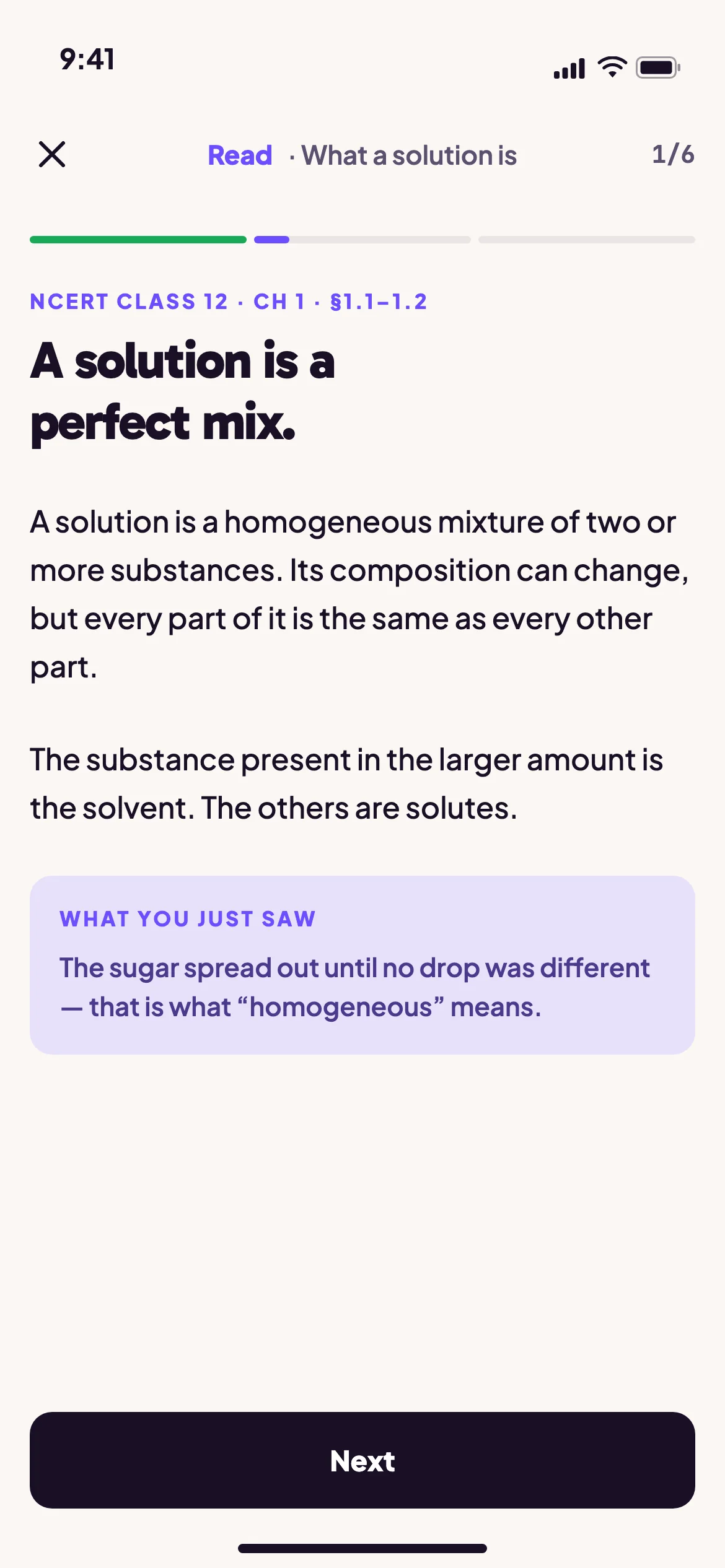
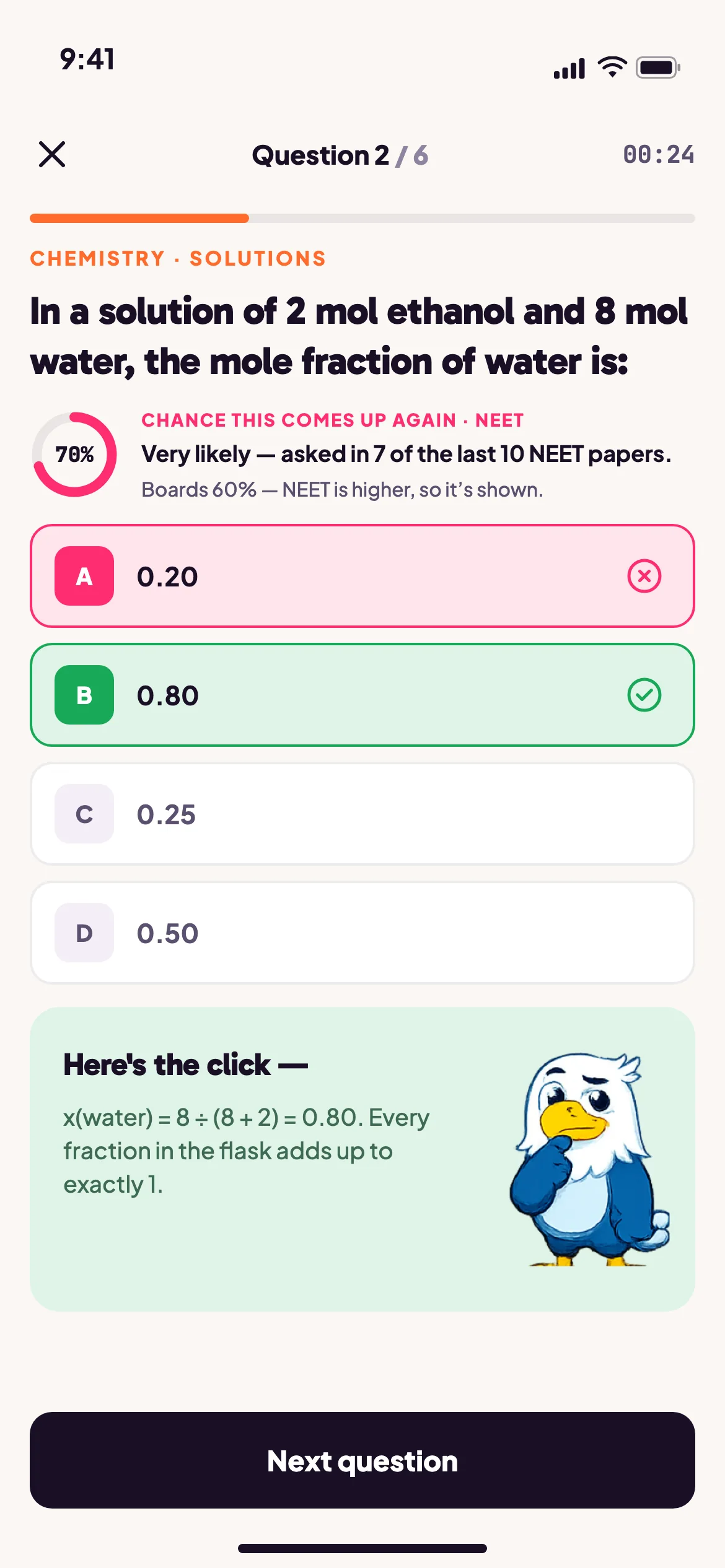
Reading a chapter and understanding it are different things. In the app every chapter is Do · Read · Verify: a game you play, a short read, then questions that check you. A full chapter, understood, in 45 to 60 minutes.
- DoA game built for the idea
- ReadThe short NCERT explainer
- VerifyQuestions that check you

Still stuck at 11pm? TarQ AI reads the answer you got wrong and teaches the idea behind it, not just the right option.