Chemistry · Organic Chemistry · Chapter notes

Amines · Class 12 Chemistry Notes

Class 12 Chemistry notes on Amines: structure and classification, nomenclature and isomer counting, six preparation routes and what each does to the carbon count, hydrogen bonding and boiling point, the basicity order and the three effects behind it, carbylamine, Hinsberg and nitrous acid, aniline and ring protection, the nine products of a diazonium salt, and a JEE Advanced tier on mechanisms and synthesis strategy.

Class 12JEE MainJEE AdvancedNEETCBSE BoardsNCERTFree, no sign up
31Pages
16Diagrams
15Questions

In short

Follow the nitrogen's lone pair and the chapter follows. That lone pair makes an amine both basic and nucleophilic, so basicity order, acylation, carbylamine and Hinsberg are all the same electron pair doing different jobs. In aniline the pair is delocalised into the ring, which is why aniline is a far weaker base and why the ring is protected before nitration.

Contents
  1. ·How to Read This Set
  2. 1Structure and Classification a pyramid with a lone pair
  3. 2Names and Isomers common, IUPAC, and how to count
  4. 3Preparation six routes and the carbon count
  5. 4Physical Properties hydrogen bonds decide boiling point
  6. 5Basicity three effects, one order
  7. 6Reactions of the Amino Group acylation, carbylamine, HNO₂, Hinsberg
  8. 7Aniline and the Ring too reactive, so protect it
  9. 8Diazonium Salts one salt, nine products
  10. 9Basicity Beyond the Basics JEE Advanced tier begins
  11. 10Mechanisms Hofmann, carbylamine, diazotisation
  12. 11Synthesis Strategy use N as a temporary tool
  13. 12Advanced Worked Problems five problems, five techniques
  14. 13Practice Set fifteen questions with traps explained
  15. ·Practice Set: Answers and Traps
  16. ★Amines · Fact Sheet
0

How to Read This Set

Sections 1 to 8 cover the full syllabus for NEET and JEE Main. Sections 9 to 12 are the JEE Advanced layer. Section 13 is a practice set across all three exams.

The whole chapter in one line

Follow the nitrogen's lone pair.

Basicity and nucleophilic reactions come from that one pair of electrons. So do the reactivity of aniline's ring and the diazonium salt.

Think it through
What this chapter is worth
  • It appears in every NEET and JEE paper, often as a conversion or a basicity order.
  • Diazonium conversions are a favourite for two-step and three-step questions.
  • The tests here (carbylamine, Hinsberg, nitrous acid) also come up in board practicals.
Trap alert
The habit that fixes this chapter
  • Before ranking or predicting, ask where the lone pair is.
  • Is it free on an sp³ N? Shared with a benzene ring? Shared with a C=O? Part of an aromatic ring?
  • That single answer settles most questions before any memorised order.
1

Structure and Classification

An amine is ammonia with one or more H atoms replaced by carbon groups. The nitrogen is sp³. Three corners hold bonds and the fourth holds the lone pair.

The lone pair is the business end of every amine. In aniline it leaks into the ring.WHAT AN AMINE LOOKS LIKE: A PYRAMID WITH A LONE PAIR ON TOPMETHYLAMINENCH3HHsp³ N, bond angle about 108°the lone pair takes the fourth cornerANILINENH2δ-δ-δ-orthoparalone pair spreads into the ringso it is less free to take H⁺CLASSIFY BY CARBONS ON N1°R-NH2one R2°R2NHtwo R3°R3Nthree R4°R4N+ X-a salt1°, 2°, 3° count carbons on N, not on the carbon (unlike alcohols). (CH₃)₃C-NH₂ is 1°.
The lone pair is the business end of every amine. In aniline it leaks into the ring.
TypeGeneral formulaExample
primary (1°)R-NH2CH3NH2, methanamine
secondary (2°)R2NH(CH3)2NH, N-methylmethanamine
tertiary (3°)R3N(CH3)3N, N,N-dimethylmethanamine
quaternary saltR4N+X−(CH3)4N+I−
aryl amineN on a benzene ringC6H5NH2, aniline
Think it through
Why most amines are not optically active
  • An amine with three different groups and a lone pair looks chiral.
  • But the nitrogen flips inside out very fast, like an umbrella in the wind.
  • The two mirror forms swap too fast to separate. Quaternary salts cannot flip, so they can be resolved.
Trap alert
1°, 2°, 3° mean something different here
  • For amines, count the carbons on N, not on the carbon carrying N.
  • (CH3)3C-NH2 is a primary amine, though its carbon is tertiary. For alcohols it would be called tertiary.
2

Names and Isomers

IUPAC names replace the final -e of the alkane with -amine. Groups on N get the prefix N-.

FormulaCommon nameIUPAC name
CH3CH2NH2ethylamineethanamine
CH3CH2CH2NH2n-propylaminepropan-1-amine
(CH3)2CHNH2isopropylaminepropan-2-amine
CH3NHC2H5ethylmethylamineN-methylethanamine
(CH3)3NtrimethylamineN,N-dimethylmethanamine
H2N-CH2CH2-NH2ethylenediamineethane-1,2-diamine
C6H5NHCH3N-methylanilineN-methylbenzenamine
CH3-C6H4-NH2 (para)p-toluidine4-methylaniline
Same atoms, four molecules. Two are primary, one secondary, one tertiary.FOUR AMINES, ONE FORMULA: THE ISOMERS OF C₃H₉N1°NH2propan-1-aminestraight chain1°NH2propan-2-amineNH₂ on the middle C2°NHN-methylethanaminetwo C groups on N3°NN,N-dimethylmethanaminethree CH₃ on NC₄H₁₁N has 8 amines: 4 primary, 3 secondary, 1 tertiary. Count them the same way.
Same atoms, four molecules. Two are primary, one secondary, one tertiary.
Worked example
How many amines have the formula C4H11N? Sort them by type.

Primary: butan-1-amine, butan-2-amine, 2-methylpropan-1-amine, 2-methylpropan-2-amine. That is 4.

Secondary: N-methylpropan-1-amine, N-methylpropan-2-amine, N-ethylethanamine. That is 3.

Tertiary: N,N-dimethylethanamine. That is 1.

Answer: 8 amines, or 9 if you count both mirror forms of butan-2-amine
Trap alert
Metamers are still isomers
  • N-methylpropan-1-amine and N-ethylethanamine are different molecules.
  • The groups on N differ in size. Such isomers are called metamers. Count each one.
3

Preparation

Six routes lead to amines. Choose by two things: the starting material you have, and whether the carbon count must change.

Each route keeps, adds or removes carbon. Questions on conversions turn on exactly that.SIX ROUTES TO A PRIMARY AMINE, AND WHAT EACH DOES TO THE CARBONSR-NH2primary amineR-NO2Sn + HCl, or H2/Pdkeeps all CR-XNH3 (excess), heat1°, 2°, 3° mixturephthalimide + R-XKOH, then hydrolysispure 1° onlyR-C≡NLiAlH4 or Na/C2H5OHgives R-CH2NH2R-CONH2LiAlH4gives R-CH2NH2R-CONH2Br2 + KOHone C lostOnly the nitro route makes aniline. Gabriel and NH₃ fail for aryl halides, which resist SN2.
Each route keeps, adds or removes carbon. Questions on conversions turn on exactly that.
C6H5NO2  +  Fe/HCl (or Sn/HCl)  →  C6H5NH2
R-X  +  NH3  →  RNH2 → R2NH → R3N → R4N+X−
R-X  +  KCN  →  R-C≡N  →(LiAlH4)→  R-CH2-NH2
phthalimide →(KOH)→ N−K+ →(R-X)→ N-R →(NaOH aq)→ R-NH2
R-CONH2  +  Br2  +  4 NaOH  →  R-NH2 + Na2CO3 + 2 NaBr + 2 H2O
RouteGood forWatch out
nitro reductionaryl amines like anilineFe/HCl is preferred: the FeCl2 formed regenerates HCl
ammonolysis of R-Xquick, cheapgives a mixture; excess NH3 favours 1°
nitrile reductionadding one C to a halidethe C of CN becomes CH2
Gabriel phthalimidepure 1° aminesfails for aryl amines: aryl halides resist SN2
Hoffmann bromamidedropping one Cthe C=O carbon leaves as carbonate
Worked example 1
Convert ethanoic acid into methanamine.

The target has one carbon fewer. That points to the Hoffmann bromamide route.

CH3COOH → (NH3, heat) → CH3CONH2 → (Br2, KOH) → CH3NH2.

Answer: make the amide, then use Br2 and KOH
Worked example 2
Convert bromoethane into propan-1-amine.

The target has one carbon more. A cyanide adds exactly one.

CH3CH2Br → (KCN) → CH3CH2CN → (LiAlH4) → CH3CH2CH2NH2.

Answer: KCN, then LiAlH4
Trap alert
Gabriel cannot make aniline
  • The Gabriel route needs an SN2 step. An aryl halide will not do SN2, so no aryl amine forms.
  • For aniline and its relatives, reduce the nitro compound instead.
4

Physical Properties

Primary and secondary amines can hydrogen bond through their N-H bonds. Tertiary amines have none to give.

Same mass, same shape of chain. The number of N-H bonds sets the boiling point.HYDROGEN BONDS DECIDE BOILING POINT: SAME MASS, VERY DIFFERENT bppropan-1-olO-H, strongest H-bond97 °Cpropan-1-amine1°: two N-H48 °CN-methylethanamine2°: one N-H37 °Ctrimethylamine3°: no N-H3 °Cbutaneno H-bond at all-0.5 °CWHYN-H bonds make H-bonds.1° has two, 2° one, 3° none.N is less electronegativethan O, so amines < alcohols.All five have nearly the same mass (58 to 60). Only the hydrogen bonding changes.
Same mass, same shape of chain. The number of N-H bonds sets the boiling point.
PropertyWhat happensWhy
boiling point1° > 2° > 3° for isomersmore N-H, more hydrogen bonds
against alcoholsamines boil lowerN is less electronegative than O, so N-H...N is weaker
solubility in watersmall amines dissolve; it falls with sizeH-bonds to water, but a larger carbon chain repels it
smellsmall amines smell fishyvolatile and basic
colour of anilinecolourless when pure, darkens in airslow oxidation in air
Trap alert
Tertiary amines still dissolve in water
  • A 3° amine cannot donate an H-bond, but its lone pair can accept one from water.
  • So trimethylamine is soluble. It just cannot H-bond to itself, so it boils low.
5

Basicity

An amine is a base because its lone pair can take a proton. The more available the lone pair, the stronger the base.

Measuring base strength

RNH2+H2O⇌RNH3++OH−RNH_2+H_2O\rightleftharpoons RNH_3^{+}+OH^{-}

Kb=[RNH3+][OH−][RNH2]K_b=\dfrac{[RNH_3^+][OH^-]}{[RNH_2]}
  
pKb=−log⁡KbpK_b=-\log K_b

A lower pKb means a stronger base.

Three effects, scored for each methylamine ion. No single effect predicts the order. The balance does.WHY (CH₃)₂NH IS THE STRONGEST BASE IN WATER: THREE EFFECTS PULL DIFFERENT WAYS1° ionCH3NH3+H2OH2OH2O3 N-H bonds to water2° ion(CH3)2NH2+H2OH2O2 N-H bonds to water3° ion(CH3)3NH+H2O1 N-H bond to water+I push from CH₃ groupsmore CH₃, more pushH-bonding of the ionmore N-H, more stable ionroom for water around Ncrowding hurts the 3° ionNet in water: 2° (pKb 3.27) > 1° (3.38) > 3° (4.22) > NH₃ (4.75). In the gas phase, 3° wins.
Three effects, scored for each methylamine ion. No single effect predicts the order. The balance does.
Basicity orders feel random?
Watch the three effects compete.

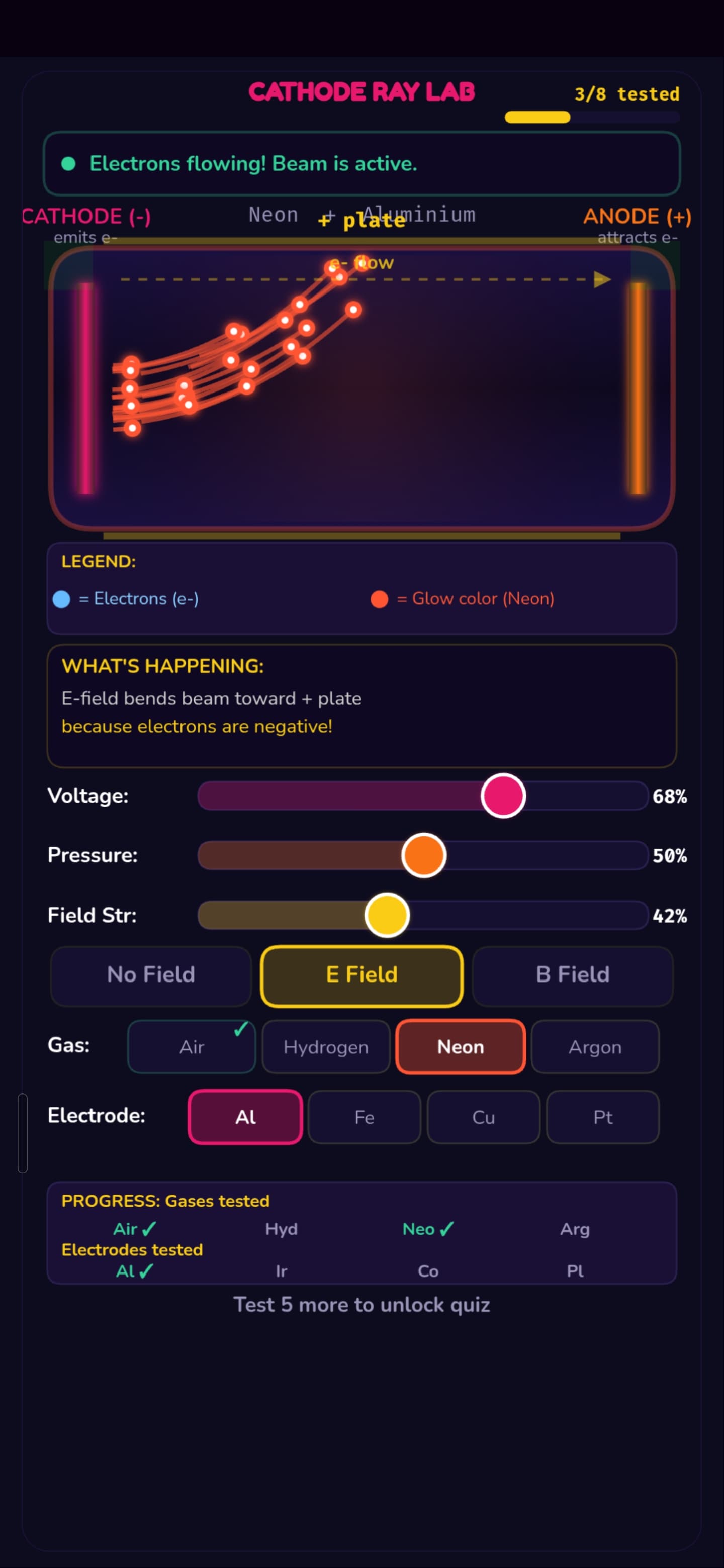
Add CH3 groups one at a time. See the push grow, the hydrogen bonding fall, and the order flip from gas to water.

Play this concept in the app
SeriesOrder in waterpKb values
methyl2° > 1° > 3° > NH33.27, 3.38, 4.22, 4.75
ethyl2° > 3° > 1° > NH33.00, 3.25, 3.29, 4.75
gas phase, any series3° > 2° > 1° > NH3only the +I effect counts
Structures II to IV use the lone pair inside the ring. The proton finds it less available.ANILINE'S LONE PAIR IS SHARED WITH THE RING: FOUR RESONANCE STRUCTURESNH2IneutralNH2+-II- at orthoNH2+-III- at paraNH2+-IV- at orthoThe lone pair is busy in the ring, so aniline holds H⁺ weakly: pKb 9.38 against 3.38 for CH₃NH₂.The anilinium ion C₆H₅NH₃⁺ has no lone pair left, so it has no such resonance. Losing it costs nothing.Charge piles up at ortho and para. That is also why the ring reacts so fast with electrophiles.
Structures II to IV use the lone pair inside the ring. The proton finds it less available.
Aliphatic amines sit near pKb 3 to 5. Aromatic amines sit near 9 to 13.THE pKb LADDER: LOWER pKb MEANS A STRONGER BASE34567891011121314(C₂H₅)₂NH3.00(C₂H₅)₃N3.25(CH₃)₂NH3.27C₂H₅NH₂3.29CH₃NH₂3.38(CH₃)₃N4.22C₆H₅CH₂NH₂4.70NH₃4.75p-anisidine8.66p-toluidine8.92N-methylaniline9.30aniline9.38p-chloroaniline10.0m-nitroaniline11.5p-nitroaniline13.0(C₆H₅)₂NH13.2aliphatic amines and NH₃aromatic aminesA gap of 6 units between CH₃NH₂ and aniline is a million-fold difference in Kb.
Aliphatic amines sit near pKb 3 to 5. Aromatic amines sit near 9 to 13.
Group on the ringEffect on aniline's basicityExample
-CH3, -OCH3 at pararaises it: they push electrons inp-toluidine 8.92, p-anisidine 8.66
-Cl at paralowers it: -I winsp-chloroaniline 10.0
-NO2 at paralowers it a lot: -M and -Ip-nitroaniline 13.0
-NO2 at metalowers it less: only -I reachesm-nitroaniline 11.5
CH2 between ring and Nbehaves like an aliphatic aminebenzylamine 4.70
Worked example
Arrange in increasing basicity in water: NH3, CH3NH2, (CH3)2NH, (CH3)3N, C6H5NH2.

Aniline's lone pair is shared with the ring, so it is the weakest.

Among the rest, use the water order for methyl amines: 2° > 1° > 3° > NH3.

Answer: C6H5NH2 < NH3 < (CH3)3N < CH3NH2 < (CH3)2NH
Think it through
Salts let you separate amines
  • Aniline does not dissolve in water. It does dissolve in dilute HCl, as anilinium chloride.
  • Add NaOH and the free aniline comes back out.
  • This is how amines are pulled out of a mixture with neutral compounds.
Trap alert
Water order and gas order differ
  • Gas phase: 3° > 2° > 1°. In water: 2° > 1° > 3° for methyl. Read which the question asks.
  • Do not use the methyl order for ethyl amines. With ethyl groups, 3° beats 1°.
6

Reactions of the Amino Group

The lone pair makes N a nucleophile. Most reactions here start with N attacking something.

Acylation:  C2H5NH2 + CH3COCl →(pyridine)→ C2H5NHCOCH3 + HCl
Benzoylation:  C6H5NH2 + C6H5COCl →(NaOH)→ C6H5NHCOC6H5 + HCl
Carbylamine:  R-NH2 + CHCl3 + 3 KOH →(heat)→ R-N≡C + 3 KCl + 3 H2O

Acylation needs an N-H, so it works for 1° and 2° amines only. Pyridine soaks up the HCl and pushes the reaction forward. The carbylamine test gives a foul-smelling isocyanide. Only primary amines give it.

AmineWith nitrous acid (NaNO2 + HCl)What you see
1° aliphaticRNH2 → ROH + N2bubbles of N2
1° aromaticC6H5NH2 → C6H5N2+Cl− at 0 to 5 °Cno gas when cold; the salt couples to dyes
2°, either kindR2NH → R2N-N=Oyellow oily nitrosamine
3° aliphaticforms a soluble saltno visible change
3° aromaticC6H5N(CH3)2 → para-nitroso productgreen solid
One reagent and one base give three different outcomes. The difference is the N-H left behind.HINSBERG TEST: BENZENESULPHONYL CHLORIDE SORTS 1°, 2° AND 3° AMINESSO2ClC₆H₅SO₂ClHinsberg reagentthen add KOH1° aminedissolves in KOHC₆H₅SO₂-NH-RN-H left: acidic2° aminestays insolubleC₆H₅SO₂-NR₂no N-H left3° amineno reactionno productno N-H to replaceThe N-H left on the 1° product is acidic, so KOH pulls it off and the salt dissolves.
One reagent and one base give three different outcomes. The difference is the N-H left behind.
Worked example
Three bottles hold aniline, N-methylaniline and N,N-dimethylaniline. Tell them apart with nitrous acid.

Aniline is 1° aromatic. Cold HNO2 gives a diazonium salt. Added to alkaline 2-naphthol, it gives a red dye.

N-methylaniline is 2°. It gives a yellow oily N-nitroso compound.

N,N-dimethylaniline is 3° aromatic. It gives a green p-nitroso compound.

Answer: red dye, yellow oil, green solid
Trap alert
Two tests, two traps
  • Only 1° amines give the carbylamine smell. A 2° amine gives nothing, not a weaker smell.
  • In the Hinsberg test, 3° amines do not react at all. They do dissolve in acid, which tells them apart from 2° products.
7

Aniline and the Ring

The -NH2 group pushes its lone pair into the ring. That makes aniline react with electrophiles very fast, at ortho and para. Often too fast.

C6H5NH2 + 3 Br2 (water) → 2,4,6-tribromoaniline (white precipitate) + 3 HBr
Acetylation slows the ring down. After the substitution, the acetyl group comes off and NH2 returns.TAMING ANILINE: ACETYLATE, SUBSTITUTE, THEN REMOVE THE ACETYL GROUPNH2anilineNHCOCH3acetanilideNHCOCH3Brp-bromoacetanilideNH2Brp-bromoaniline(CH₃CO)₂O, pyridineBr₂, CH₃COOHH⁺ or OH-, heatThe C=O pulls on N's lone pair, so the ring is only mildly activated.One Br goes in, at para. The bulky group also blocks ortho.Br₂ water on plain aniline gives 2,4,6-tribromoaniline at once, as a white precipitate.
Acetylation slows the ring down. After the substitution, the acetyl group comes off and NH2 returns.
In strong acid, aniline and anilinium compete. Each directs to different positions.NITRATING ANILINE GIVES 47% META. THE ACID TURNS IT INTO A DIFFERENT GROUPNH2aniline+M: ortho/para directorH⁺ (conc. acid)NH3+anilinium ion-I, no lone pair: meta directorpara-nitroaniline51%meta-nitroaniline47%ortho-nitroaniline2%only 2% ortho: bulk and the charge both push awayMuch of the aniline is protonated, and that ion directs meta. Protect the NH₂ to get clean para product.
In strong acid, aniline and anilinium compete. Each directs to different positions.
ReactionWhat happensReason
bromine water2,4,6-tribromoaniline at oncethe ring is strongly activated
nitration, direct51% para, 47% meta, 2% ortho; some oxidationanilinium ion forms and directs meta
sulphonationsulphanilic acid on heating at 453 to 473 Kforms a zwitterion, H3N+-C6H4-SO3−
Friedel-Craftsdoes not workN's lone pair binds AlCl3, and the ring is deactivated
Worked example
Make p-nitroaniline from aniline in good yield.

Direct nitration gives a mixture and oxidation. So protect N first.

Aniline → ((CH3CO)2O) → acetanilide → (conc. HNO3, H2SO4) → p-nitroacetanilide → (H+, heat) → p-nitroaniline.

Answer: acetylate, nitrate, then hydrolyse
Trap alert
Friedel-Crafts fails, and so does direct nitration
  • Aniline is a Lewis base. It grabs AlCl3 and turns into a deactivated salt.
  • In nitrating acid it is protonated. Expect lots of meta product, not pure para.
8

Diazonium Salts

A primary aromatic amine with cold nitrous acid gives a diazonium salt. This one salt can be turned into almost anything.

C6H5NH2 + NaNO2 + 2 HCl →(273 to 278 K)→ C6H5N2+Cl− + NaCl + 2 H2O

Aryl diazonium ions are stable in the cold because the positive charge spreads into the ring. Alkyl diazonium ions have no ring to help, so they fall apart at once to N2 and a carbocation.

Eight routes replace the N2 group. In coupling, the N=N stays and joins two rings.ONE DIAZONIUM SALT, NINE PRODUCTS: N₂ LEAVES, OR STAYS AS N=NN≡N+ Cl-benzenediazonium chloridemade at 0 to 5 °CC₆H₅ClCuCl / HClSandmeyerC₆H₅BrCuBr / HBrSandmeyerC₆H₅CNCuCN / KCNSandmeyerC₆H₅IKIno copper neededC₆H₅FHBF₄, then heatBalz-SchiemannC₆H₅OHH₂O, warmphenolC₆H₆H₃PO₂ or C₂H₅OHremoves the NC₆H₅NO₂HBF₄, then NaNO₂/Cu, heatnitro groupC₆H₅-N=N-C₆H₄-OHphenol in NaOH: azo couplingorange dye, N keptAbove 5 °C the salt decomposes to phenol and N₂, so make it cold and use it at once.
Eight routes replace the N2 group. In coupling, the N=N stays and joins two rings.
Too many reagents to remember?
Spin the diazonium wheel.

Pick a product and the reagent lights up. Then try it the other way round, from reagent to product.

Play this concept in the app
Too acidic and the partner loses its push. Too basic and the diazonium salt is destroyed.AZO COUPLING WORKS ONLY IN A pH WINDOW, AND THE WINDOW DEPENDS ON THE PARTNERwith phenolpH 9-10phenol not ionised: too slowArN₂⁺ turns to diazotatewith anilinepH 4-5anilinium: no free lone pairdiazotate forms02468101214pHPhenol needs a base to become phenoxide. Aniline needs mild acid, not strong acid. The salt must survive both.
Too acidic and the partner loses its push. Too basic and the diazonium salt is destroyed.
C6H5N2+Cl− + C6H5OH →(OH−)→ p-hydroxyazobenzene (orange)
C6H5N2+Cl− + C6H5NH2 →(mild acid)→ p-aminoazobenzene (yellow)
Worked example 1
Make fluorobenzene from benzene.

Fluorine cannot be put on directly. Go through the diazonium salt.

Benzene → (HNO3, H2SO4) → nitrobenzene → (Sn, HCl) → aniline → (NaNO2, HCl, 0 °C) → diazonium salt → (HBF4, heat) → fluorobenzene.

Answer: four steps, ending with the Balz-Schiemann reaction
Worked example 2
Make benzoic acid from aniline.

Diazotise, then swap N2 for CN with CuCN. Then hydrolyse the nitrile.

C6H5NH2 → C6H5N2+ → (CuCN/KCN) → C6H5CN → (H3O+, heat) → C6H5COOH.

Answer: diazotise, CuCN, then hydrolyse
Trap alert
Three diazonium slips
  • Diazotise at 0 to 5 °C. Warm, the salt turns into phenol before you can use it.
  • Iodine needs only KI. Fluorine needs HBF4 and heat. Neither is a Sandmeyer reaction.
  • In coupling, the N2 is not lost. The product keeps -N=N-.
Tier 2
The JEE Advanced layer
Everything so far is complete for NEET and JEE Main. From here each problem needs a route you build yourself. No single formula reaches the answer.
9

Basicity Beyond the Basics

JEE Advanced mixes nitrogen types that the simple rules do not cover. One question settles all of them: where does the lone pair sit, and is it busy?

Same atom, four situations. The pKb spans from 0.4 to almost no basicity at all.WHERE THE LONE PAIR SITS DECIDES BASICITYpiperidineNHsp³ NpKb 2.88pyridineNsp² N, lone pair in planepKb 8.75pyrroleNH6πlone pair is part of the 6 πalmost no basicityguanidineCNH2NH2NH2+cation shares + over 3 NpKb 0.4More s-character holds the lone pair tighter. A lone pair used in aromaticity is not for sale.
Same atom, four situations. The pKb spans from 0.4 to almost no basicity at all.
EffectWhat it doesExample
more s-characterlone pair held closer to N, so less basicpyridine (sp²) 8.75 against piperidine (sp³) 2.88
lone pair in an aromatic ringnot available at allpyrrole is almost non-basic
lone pair on C=Oshared with oxygenamides are almost neutral
cation spread over 3 Nthe ion is very stableguanidine, pKb about 0.4
ortho effectany ortho group weakens an anilineo-toluidine 9.56, weaker than aniline 9.38
steric inhibition of resonanceortho groups twist NMe2 out of the ring planeN,N-dimethyl-o-toluidine is stronger than N,N-dimethylaniline
Worked example
Arrange in increasing basicity: acetamide, aniline, pyridine, piperidine, guanidine.

Acetamide's lone pair is shared with C=O. It is the weakest.

Aniline (9.38) is weaker than pyridine (8.75). Pyridine's sp² lone pair is free; aniline's is shared with the ring.

Piperidine (2.88) is a normal sp³ amine. Guanidine (0.4) forms a cation spread over three N atoms.

Answer: acetamide < aniline < pyridine < piperidine < guanidine
Trap alert
Pyridine is stronger than aniline
  • Most students rank pyridine last because of sp². But aniline's lone pair is busy in the ring.
  • Pyridine's lone pair points out, in the plane, and is not part of the aromatic sextet.
10

Mechanisms

JEE Advanced asks why a product forms, not just what forms. Four mechanisms cover this chapter.

R moves from carbon to nitrogen in one step. That is why a chiral R keeps its configuration.HOFMANN BROMAMIDE: THE R GROUP MOVES FROM CARBON TO NITROGENRCONH2amideBr₂, OH-RCONHBrN-bromoamideOH-takes N-HRCON--BranionR shifts as Br- leavesRNCOisocyanate2 OH-, H₂ORNH2+ CO₃2-amine, one C shorterOverall: RCONH₂ + Br₂ + 4 KOH → RNH₂ + K₂CO₃ + 2 KBr + 2 H₂OThe C=O carbon leaves as carbonate. R moves with its bonds intact, so a chiral R keeps its configuration.
R moves from carbon to nitrogen in one step. That is why a chiral R keeps its configuration.
ReactionKey intermediateWhat it explains
Hofmann bromamideisocyanate, R-N=C=Oone C lost; configuration kept
carbylaminedichlorocarbene, :CCl2, from CHCl3 and baseonly 1° amines can lose two H to form an isocyanide, R-NC
diazotisationnitrosonium ion, NO+, from HNO2 and acidneeds N-H bonds to lose, so only 1° gives N2+
Gabrielphthalimide anion, an N nucleophileSN2, so it fails with aryl and 3° halides
A bulky, positive leaving group sends the base to the most accessible hydrogen.HOFMANN ELIMINATION GIVES THE LESS SUBSTITUTED ALKENE, THE OPPOSITE OF SAYTZEFFN+(CH3)3C1C32-butyltrimethylammoniumhydroxide, heatH from C1H from C3but-1-enebut-2-enePRODUCT SHAREHofmann, -NMe₃⁺ leavesbut-1-ene~95%but-2-ene~5%E2 of 2-bromobutanebut-1-ene~19%but-2-ene~81%The big NMe₃⁺ group crowds C3, and the C1 hydrogens are more acidic. So the base takes H from C1.
A bulky, positive leaving group sends the base to the most accessible hydrogen.
Worked example
N,N,N-trimethylpentan-2-aminium hydroxide is heated. Which alkene forms mainly? What would 2-bromopentane give with ethoxide?

The leaving group is the bulky -N(CH3)3+. The base takes H from the CH3 end, C1, which is easiest to reach.

2-bromopentane with ethoxide follows Saytzeff and gives mostly pent-2-ene.

Answer: pent-1-ene from the ammonium salt; pent-2-ene from the bromide
Trap alert
Hofmann rule versus Saytzeff rule
  • A quaternary ammonium leaving group gives the less substituted alkene.
  • A halide leaving group with a small base gives the more substituted alkene. Same skeleton, opposite answer.
11

Synthesis Strategy

In ring synthesis, the nitrogen group is a tool. You put it on to steer, then change it or remove it.

ToolUse
-NH2, then remove with H3PO2a strong ortho/para director that can vanish afterwards
-NO2, then reducea meta director that later becomes NH2
-NHCOCH3a milder ortho/para director; gives one substitution, at para
the diazonium saltplaces F, I, CN, OH or H where no direct reaction can
Worked example 1
Make m-bromophenol from nitrobenzene.

OH and Br must be meta. NO2 is a meta director, so brominate first.

Nitrobenzene → (Br2, FeBr3) → m-bromonitrobenzene → (Sn, HCl) → m-bromoaniline.

→ (NaNO2, HCl, 0 °C) → diazonium salt → (H2O, warm) → m-bromophenol.

Answer: brominate, reduce, diazotise, then warm with water
Worked example 2
Make 1,3,5-tribromobenzene from aniline.

The three Br atoms sit meta to each other. No single group directs like that.

But NH2 sends Br to 2, 4 and 6, which are meta to each other. Then remove the NH2.

Aniline → (Br2 water) → 2,4,6-tribromoaniline → (NaNO2, HCl, 0 °C) → (H3PO2) → 1,3,5-tribromobenzene.

Answer: brominate, diazotise, then remove N with H3PO2
Trap alert
Order matters
  • Decide the order by which group directs the next step. Swap two steps and the product changes.
  • In Example 1, reducing first would make NH2 the director, and Br would go ortho and para.
12

Advanced Worked Problems

Each problem uses a different technique. None of them can be solved by recalling one reaction.

Problem 1 · mechanism and stereochemistry
(S)-2-methylbutanamide is treated with Br2 and KOH. Name the product, with its configuration.
What it demands: knowing the R group migrates with retention, then checking that the CIP label does not change

Hofmann bromamide removes the C=O carbon. The group CH3CH2CH(CH3)- moves from C to N. So the product is butan-2-amine.

The group moves with its bonds intact, so the arrangement in space is kept.

Now re-check the label. Before, -CONH2 ranked first at the stereocentre. After, -NH2 ranks first, in the same place. The other three groups keep their ranks.

Answer: (S)-butan-2-amine
Problem 2 · two chapters
0.59 g of a saturated primary amine gives 224 mL of N2 at STP with nitrous acid. The alcohol formed gives a yellow precipitate with I2 and NaOH. Identify the amine. Assume one N2 per NH2 group.
What it demands: mole counting from a gas volume, then an alcohol test to pick the isomer

Moles of N2 =22422400=0.01=\dfrac{224}{22400}=0.01. One amine gives one N2, so the molar mass is 0.590.01=59\dfrac{0.59}{0.01}=59 g/mol.

A saturated amine CnH2n+3N with mass 59 has n = 3. So it is propan-1-amine or propan-2-amine.

The iodoform test needs a CH3-CH(OH)- group. Only propan-2-ol has it.

Answer: propan-2-amine
Problem 3 · deduction
An aromatic amine A, C7H9N, is diazotised in the cold. The product gives a red dye with alkaline 2-naphthol. With bromine water, A gives C7H6Br3N. Identify A.
What it demands: using the dye test to fix the amine type, then turning a bromine count into a position count

A stable diazonium salt means A is a primary aromatic amine. That rules out benzylamine and N-methylaniline. So A is a toluidine.

Three Br atoms need three free positions ortho and para to NH2: 2, 4 and 6.

In o-toluidine CH3 blocks 2. In p-toluidine it blocks 4. Only in m-toluidine are all three free.

Answer: m-toluidine (3-methylaniline)
Each round of methylation and elimination breaks one C-N bond. Two rounds free the nitrogen.TWO HOFMANN ELIMINATIONS OPEN THE PIPERIDINE RING AND REMOVE THE NITROGENNHpiperidine2 CH₃IN+Me2N,N-dimethylpiperidiniumAg₂O, H₂OheatNMe2ring opened: first C=CCH₃I, thenAg₂O, heatpenta-1,4-diene+ (CH₃)₃NCH₃I used: 2 + 1 = 3. Each elimination needs a quaternary N first.Counting the CH₃I tells you how many C-N bonds the nitrogen started with.
Each round of methylation and elimination breaks one C-N bond. Two rounds free the nitrogen.
Problem 4 · working backwards
Amine X, C5H11N, has no C=C. It takes 2 mol of CH3I to become a quaternary salt. Two rounds of Hofmann elimination, with one more CH3I between them, give penta-1,4-diene and trimethylamine. Identify X.
What it demands: counting CH3I to find how many C-N bonds N had, then rebuilding the ring from the product

C5H11N has one degree of unsaturation and no C=C. So X has one ring.

Two CH3 groups to reach N+ means N had two C-N bonds. X is a secondary amine.

All five carbons end up in one unbranched chain with a C=C at each end. So they formed a ring, joined to N at both ends.

Answer: piperidine
Problem 5 · design a separation
A mixture holds aniline, N-methylaniline and N,N-dimethylaniline. Plan how to get each one back, pure.
What it demands: using the acidity of one product and the basicity of another to split three similar compounds

Add benzenesulphonyl chloride and aqueous KOH. Aniline's sulphonamide still has an acidic N-H, so it dissolves as a salt. N-methylaniline's sulphonamide has no N-H and stays as a solid. N,N-dimethylaniline does not react.

Separate the alkaline solution and acidify it. Aniline's sulphonamide comes out. Heat it with acid to get aniline back.

Shake the rest with dilute HCl. N,N-dimethylaniline dissolves as its salt; NaOH frees it again. The solid left is N-methylaniline's sulphonamide; acid hydrolysis frees it.

Answer: Hinsberg reagent, then acid for the 3° amine, then hydrolyse each sulphonamide
13

Practice Set

Questions 1 to 9 are NEET and JEE Main level. Questions 10 to 15 are JEE Advanced, in its real formats. Try each one before reading the answers.

NEET and JEE Main
Q1NEET · Level 2 · single correct
The correct order of basic strength in water is:
(A) (CH3)3N > (CH3)2NH > CH3NH2 > NH3(B) CH3NH2 > (CH3)2NH > (CH3)3N > NH3(C) (CH3)2NH > CH3NH2 > (CH3)3N > NH3(D) NH3 > CH3NH2 > (CH3)2NH > (CH3)3N
Q2JEE Main · Level 2 · single correct
Which pair can be told apart by the carbylamine test?
(A) ethylamine and aniline(B) methylamine and dimethylamine(C) aniline and benzylamine(D) propan-1-amine and propan-2-amine
Q3JEE Main · Level 2 · single correct
Which amide gives propan-2-amine with Br2 and KOH?
(A) 2-methylpropanamide(B) butanamide(C) propanamide(D) 2-methylbutanamide
Q4JEE Main · Level 2 · single correct
An amine C4H11N gives a Hinsberg product that does not dissolve in KOH. The amine could be:
(A) butan-1-amine(B) 2-methylpropan-2-amine(C) N,N-dimethylethanamine(D) N-ethylethanamine
Q5NEET · Level 2 · single correct
Direct nitration of aniline gives about 47% meta product because:
(A) -NH2 is a meta director(B) the anilinium ion formed in acid is a meta director(C) the ortho positions are blocked by bulk(D) NO2+ attacks N first, then moves to meta
Q6JEE Main · Level 2 · numerical
Methylamine has pKb = 3.38. Find the pH of a 0.1 M solution at 25 °C. Give 10 × pH, rounded off to the nearest integer.
Q7NEET · Level 2 · single correct
The Gabriel phthalimide synthesis can be used to make:
(A) aniline and benzylamine(B) ethylamine and N-methylethanamine(C) benzylamine and ethylamine(D) aniline and ethylamine
Q8JEE Main · Level 2 · single correct
Which sequence turns aniline into benzonitrile?
(A) NaNO2/HCl at 0 to 5 °C, then CuCN/KCN(B) CuCN/KCN directly(C) NaNO2/HCl at 40 °C, then CuCN/KCN(D) NaNO2/HCl at 0 to 5 °C, then warm water
Q9NEET · Level 2 · single correct
Benzenediazonium chloride couples best with phenol at:
(A) pH 1 to 2(B) pH 4 to 5(C) pH 13 to 14(D) pH 9 to 10
JEE Advanced
Q10JEE Advanced · Level 3 · one or more correct
Which of the following are correct?
(A) pyrrolidine is a stronger base than pyrrole(B) p-anisidine is a stronger base than aniline(C) o-toluidine is a stronger base than p-toluidine(D) guanidine is a stronger base than ethylamine
Q11JEE Advanced · Level 3 · numerical
8.7 g of butanamide is fully converted to propan-1-amine by Br2 and KOH. What mass of KOH, in grams, does the balanced reaction use? Round off to one decimal place. (K = 39, O = 16, H = 1)
Q12JEE Advanced · Level 3 · single correct
Aniline is treated in turn with (CH3CO)2O; Br2 in CH3COOH; H3O+ and heat; NaNO2/HCl at 0 °C; then H3PO2. The final product is:
(A) bromobenzene(B) 1,4-dibromobenzene(C) 1,3,5-tribromobenzene(D) 4-bromophenol
Q13JEE Advanced · Level 3 · single correct
An aromatic amine C8H11N does not react with benzenesulphonyl chloride. With nitrous acid it gives a green solid. It is:
(A) N-ethylaniline(B) N,N-dimethylaniline(C) 2,4-dimethylaniline(D) N-methylbenzylamine
Q14JEE Advanced · Level 3 · one or more correct
About coupling of benzenediazonium chloride, which of the following are correct?
(A) With phenol it is done in mild alkali, because phenoxide is more strongly activated.(B) With aniline it is done at pH 12, so that the amine stays free.(C) p-cresol still couples, at the position ortho to its OH group.(D) The diazonium ion acts as the electrophile.
Q15JEE Advanced · Level 3 · numerical
Benzylamine (pKb 4.70) and aniline (pKb 9.38) are each made 0.1 M. Find log10 of [OH−]benzylamine / [OH−]aniline, to two decimal places.

Practice Set: Answers and Traps

Each answer shows the reasoning, then what each wrong option gets wrong. If you chose a wrong option, find your mistake there.

Q1 · (C). In water, +I, hydrogen bonding of the ion and crowding all count. For methyl amines the balance gives 2° > 1° > 3° > NH3. Traps: (A) is the gas-phase order, +I alone. (B) counts only hydrogen bonding. (D) counts only crowding.
Q2 · (B). Only 1° amines give the isocyanide smell. Methylamine gives it; dimethylamine does not. Traps: (A), (C) and (D) are pairs of 1° amines. Both give the smell, so the test cannot split them.
Q3 · (A). Hoffmann removes the C=O carbon. Putting it back on propan-2-amine's N gives (CH3)2CH-CONH2. Traps: (B) gives propan-1-amine. (C) gives ethylamine. (D) gives butan-2-amine.
Q4 · (D). A sulphonamide that will not dissolve in KOH has no N-H. So the amine is 2°. N-ethylethanamine is the only 2° amine listed. Traps: (A) and (B) are 1°: their products dissolve. (C) is 3°: it gives no product at all.
Q5 · (B). Strong acid protonates much of the aniline. The -NH3+ group has no lone pair and pulls electrons, so it directs meta. Traps: (A) is false: NH2 directs ortho and para. (C) explains the small ortho share, not the meta share. (D) invents a mechanism.
Q6 · 118. For a weak base, pOH = ½(pKb - log C) = ½(3.38 + 1) = 2.19. So pH = 14 - 2.19 = 11.81. Traps: Using pKb as pOH gives 10.62. Forgetting the ½ gives 9.62.
Q7 · (C). Gabriel needs SN2 on an alkyl halide and gives only 1° amines. Benzylamine and ethylamine both qualify. Traps: (A) and (D) include aniline: aryl halides do not do SN2. (B) includes a 2° amine, which Gabriel cannot make.
Q8 · (A). First make the diazonium salt in the cold. Then CuCN swaps N2 for CN. Traps: (B) skips diazotisation. (C) is too warm: the salt becomes phenol. (D) makes phenol on purpose.
Q9 · (D). Phenol must be ionised to phenoxide, which needs mild alkali. Too much alkali destroys the diazonium salt. Traps: (B) is aniline's window. (A) is too acidic for phenol to react. (C) turns the salt into an unreactive diazotate.
Q10 · (A), (B) and (D). Pyrrolidine has a free sp³ lone pair; pyrrole's is in the ring. OCH3 at para pushes electrons in (8.66 against 9.38). Guanidine (0.4) is far stronger than ethylamine (3.29). Traps: (C) is false: the ortho effect makes o-toluidine (9.56) weaker than p-toluidine (8.92).
Q11 · 22.4. RCONH2 + Br2 + 4 KOH → RNH2 + K2CO3 + 2 KBr + 2 H2O. Butanamide is 87 g/mol, so 8.7 g is 0.1 mol. KOH used = 0.4 mol × 56 g/mol. Traps: Using 1 KOH per amide gives 5.6. Using 2 gives 11.2. The carbonate and the two KBr need all four.
Q12 · (A). The acetyl group lets one Br in, at para. Hydrolysis gives p-bromoaniline. Diazotising and H3PO2 then remove the N. Traps: (B) forgets that H3PO2 gives H, not Br. (C) assumes the ring was not protected. (D) assumes water replaced N2.
Q13 · (B). No reaction with the Hinsberg reagent means 3°. A green p-nitroso product means 3° aromatic. C6H5N(CH3)2 fits C8H11N. Traps: (A) and (D) are 2°: they react, and give yellow oils with HNO2. (C) is 1°: it would form a diazonium salt.
Q14 · (A), (C) and (D). Phenoxide is a stronger electron donor than phenol. If para is blocked, as in p-cresol, coupling goes ortho. The diazonium ion is the electrophile. Traps: (B) is false: at pH 12 the diazonium salt is destroyed. Aniline couples in mildly acidic solution.
Q15 · 2.34. For each weak base, [OH−] = √(KbC). At equal C, the log of the ratio is ½(9.38 - 4.70). Traps: Forgetting the square root gives 4.68.

★ Amines · Fact Sheet

Every rule for revision day. Print this page alone.

STRUCTURE

sp³ N, pyramid, about 108°

1°, 2°, 3° = C atoms on N.
(CH₃)₃C-NH₂ is 1°.

PREPARATION

Nitro + Fe/HCl: aniline

Gabriel: pure 1°, no aryl.
Hoffmann: one C lost.

BOILING POINT

1° > 2° > 3° for isomers

Amines boil below alcohols.
3° still dissolves in water.

BASICITY IN WATER

Methyl: 2° > 1° > 3° > NH₃

Ethyl: 2° > 3° > 1° > NH₃
Gas phase: 3° > 2° > 1°

AROMATIC AMINES

Aniline pKb 9.38

Ring donors raise basicity.
NO₂ at para lowers it most.

CARBYLAMINE

1° only: R-NH₂ + CHCl₃ + KOH

Foul isocyanide smell.
2° and 3° give nothing.

NITROUS ACID

1° aliphatic: N₂ gas

1° aromatic: diazonium, 0 to 5 °C
2°: yellow oil. 3° aryl: green.

HINSBERG

1°: dissolves in KOH

2°: insoluble solid
3°: no reaction

ANILINE RING

Br₂ water: 2,4,6-tribromo

Nitration: 47% meta
No Friedel-Crafts. Protect N.

DIAZONIUM

CuCl, CuBr, CuCN: Sandmeyer

KI: iodo. HBF₄, heat: fluoro
H₃PO₂: H. Warm water: OH.

COUPLING

Phenol: pH 9 to 10

Aniline: pH 4 to 5
Para first; ortho if para is taken.

LONE PAIR SITE

sp³ > sp²: piperidine > pyridine

Pyrrole: almost non-basic
Guanidine: strongest, pKb 0.4

ORTHO EFFECT

Any ortho group weakens aniline.

o-toluidine 9.56 > aniline 9.38
Twisted NMe₂ gets stronger.

HOFMANN BROMAMIDE

R moves C to N, kept intact.

Uses 4 KOH per amide.
Isocyanate in the middle.

HOFMANN ELIMINATION

Least substituted alkene.

One CH₃I round per C-N bond.
Opposite of Saytzeff.

You have read it

Now play it.

Reading a chapter and understanding it are different things. In the app this chapter becomes a game you play, a short read, then practice that tests you at every step. A full chapter, understood, in 45 to 60 minutes. Free to start.

  1. A Logic Bloom concept game: a simulation you change and watch, before any of the language
    PlayA game built for the concept
  2. A short NCERT-aligned explainer in the Logic Bloom app
    ReadThe short NCERT explainer
  3. Timed practice questions in the Logic Bloom app
    PracticeTimed, until it sticks

Still stuck at 11pm? TarQPro reads the answer you got wrong and teaches the idea behind it, not just the right option.