Chemistry · Periodic Table · Chapter notes
Classification of Elements and Periodicity · Class 11 Notes
Class 11 notes on periodic classification: how the table is built, atomic radius, ionisation enthalpy, electron gain enthalpy, electronegativity, and the anomalies of period 2.
In short
The periodic table is a map, not a list to memorise. Four trends run through all of it, and all four come from one idea: how hard the nucleus pulls on the outermost electron. Nuclear charge rises across a period while shielding stays roughly constant, so the pull tightens; down a group a new shell wins, and the pull weakens.
Contents
How to Read This
- Almost every question in this chapter is a comparison: which is bigger, which is higher.
- So learn the reason behind the trend, not the trend itself.
- Blue marks a defining fact. Red marks an exception, and the exceptions are where the marks are.
How the Table Is Built
- The modern periodic law: properties are a periodic function of atomic number, not atomic mass.
- That change fixed the anomalies Mendeleev could not explain.
- Period number = the principal quantum number of the outermost shell.
- Groups 1 and 2 are the s-block. Groups 13 to 18 are the p-block. The transition metals are the d-block, and the lanthanoids and actinoids the f-block.
- Period lengths run 2, 8, 8, 18, 18, 32, 32.
Atomic Radius
- Across a period, protons are added but the electrons enter the same shell. So the pull grows and the atom shrinks.
- Down a group, a whole new shell is added. Distance and shielding both grow, so the atom expands.
- A cation is always smaller than its parent atom, since it has lost a shell or gained pull.
- An anion is always larger, since the added electron increases repulsion.
- Isoelectronic species: same electron count, so the one with the most protons is the smallest. For N³−, O²−, F−, Na⁺, Mg²⁺ the size falls in that order.
Ionisation Enthalpy
- The energy needed to remove the outermost electron from a gaseous atom.
- It rises across a period and falls down a group, opposite to atomic size.
- The second ionisation enthalpy is always larger than the first.
- Boron is lower than beryllium. Be has a full 2s subshell, which is stable, and B's electron comes from the higher 2p.
- Oxygen is lower than nitrogen. N has a half-filled 2p, which is stable, and O's fourth p electron faces extra repulsion.
- The same pattern repeats in period 3: aluminium below magnesium, sulfur below phosphorus.
- Both come from the stability of full and half-filled subshells.
Electron Gain Enthalpy and Electronegativity
- Electron gain enthalpy is the energy change when an atom gains an electron. It is a measurable quantity for an isolated atom.
- Electronegativity is the tendency of an atom to attract the shared pair in a bond. It is a relative number with no units.
- Chlorine, not fluorine, has the most negative electron gain enthalpy. Fluorine is so small that the incoming electron faces strong repulsion.
- But fluorine is still the most electronegative element. The two are different properties.
- Fluorine is 4.0 on the Pauling scale, the highest of any element.
Anomalous Properties of Period 2
- The first element of each group differs from the rest of its group.
- Reasons: very small size, high electronegativity, and no d orbitals available.
- So period 2 elements have a maximum covalence of 4, while period 3 can expand beyond eight.
- That is why nitrogen forms NCl3 but never NCl5, whereas phosphorus forms PCl5.
- Diagonal relationship: Li resembles Mg, Be resembles Al, and B resembles Si.
★ Classification and Periodicity · Fact Sheet
Every rule for revision day.
THE MODERN LAW
Properties are a periodic functionof ATOMIC NUMBER,
not atomic mass.
ATOMIC RADIUS
Falls across a periodRises down a group
Cation smaller, anion larger.
ISOELECTRONIC
Same electrons, so more protonsmeans smaller size
N³− > O²− > F− > Na⁺ > Mg²⁺.
IONISATION ENTHALPY
Rises across, falls downSecond is always > first
Opposite to atomic size.
THE TWO EXCEPTIONS
B is lower than BeO is lower than N
Full and half-filled stability.
ELECTRON GAIN
CHLORINE is the most negative,not fluorine.
F is too small, so repulsion is high.
ELECTRONEGATIVITY
Fluorine is the highest, at 4.0A relative number, no units
Different from electron gain.
PERIOD 2 ANOMALY
No d orbitals available,so maximum covalence is 4.
NCl3 exists, NCl5 does not.
DIAGONAL RELATIONSHIP
Li with MgBe with Al
B with Si.
Now play it.
Reading a chapter and understanding it are different things. In the app this chapter becomes a game you play, a short read, then practice that tests you at every step. A full chapter, understood, in 45 to 60 minutes. Free to start.
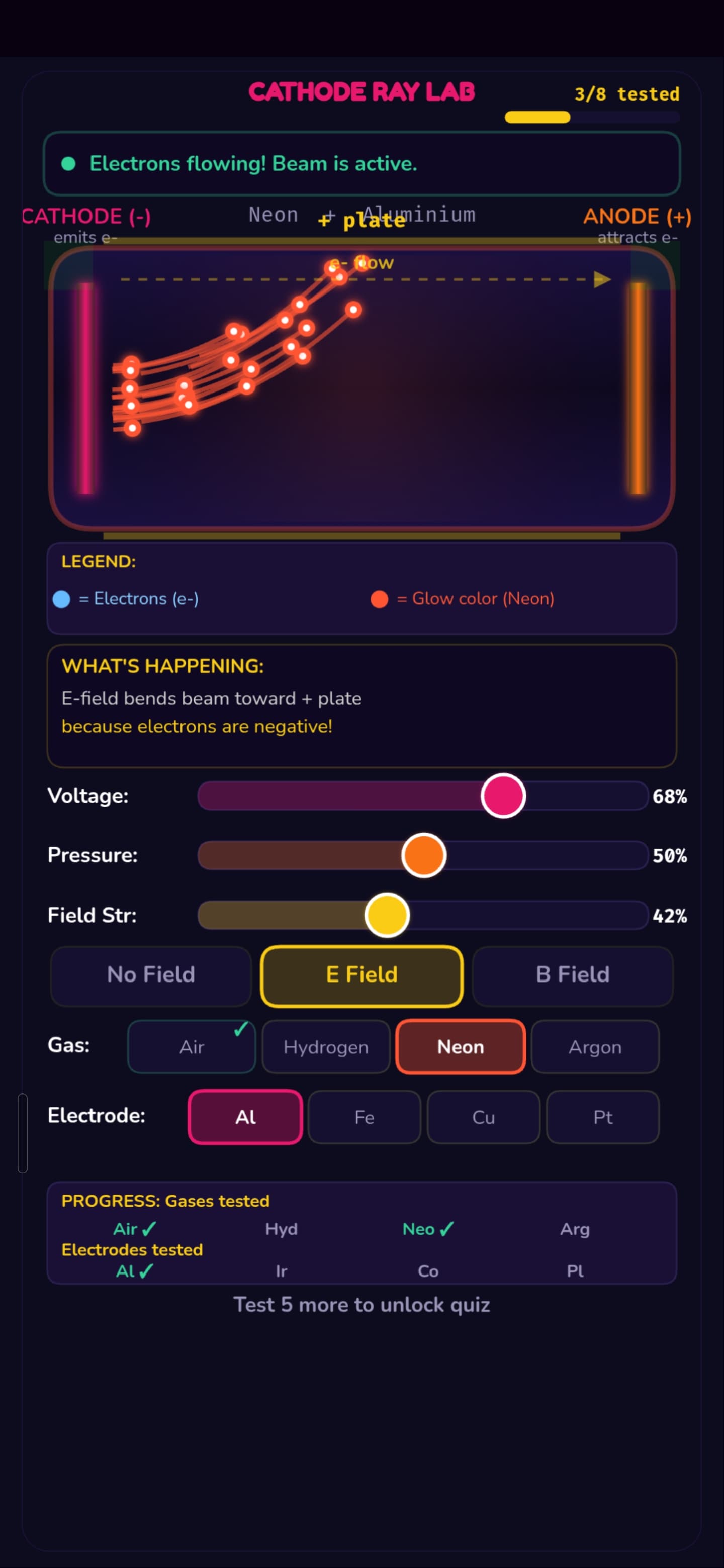
- PlayA game built for the concept
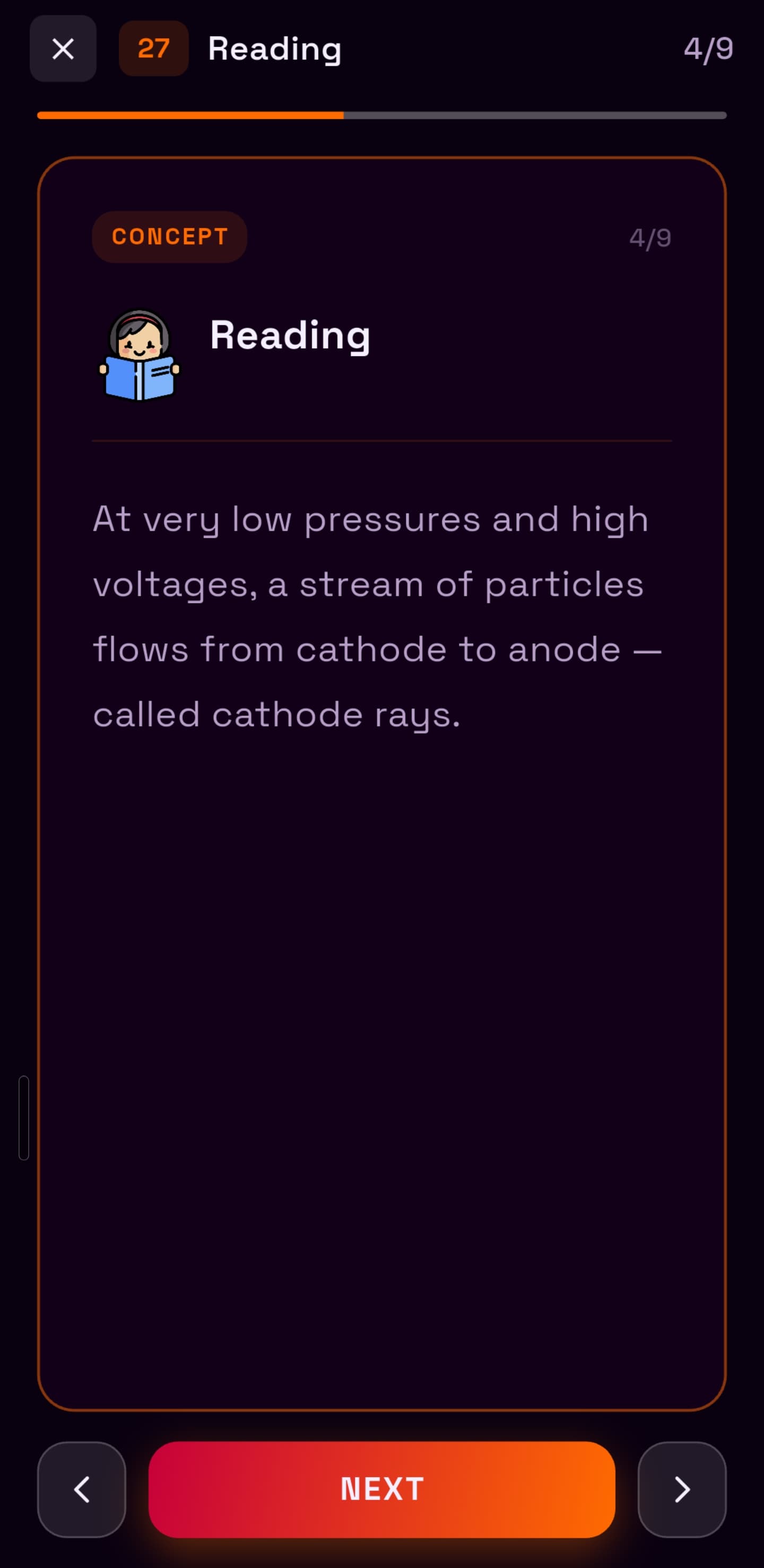
- ReadThe short NCERT explainer
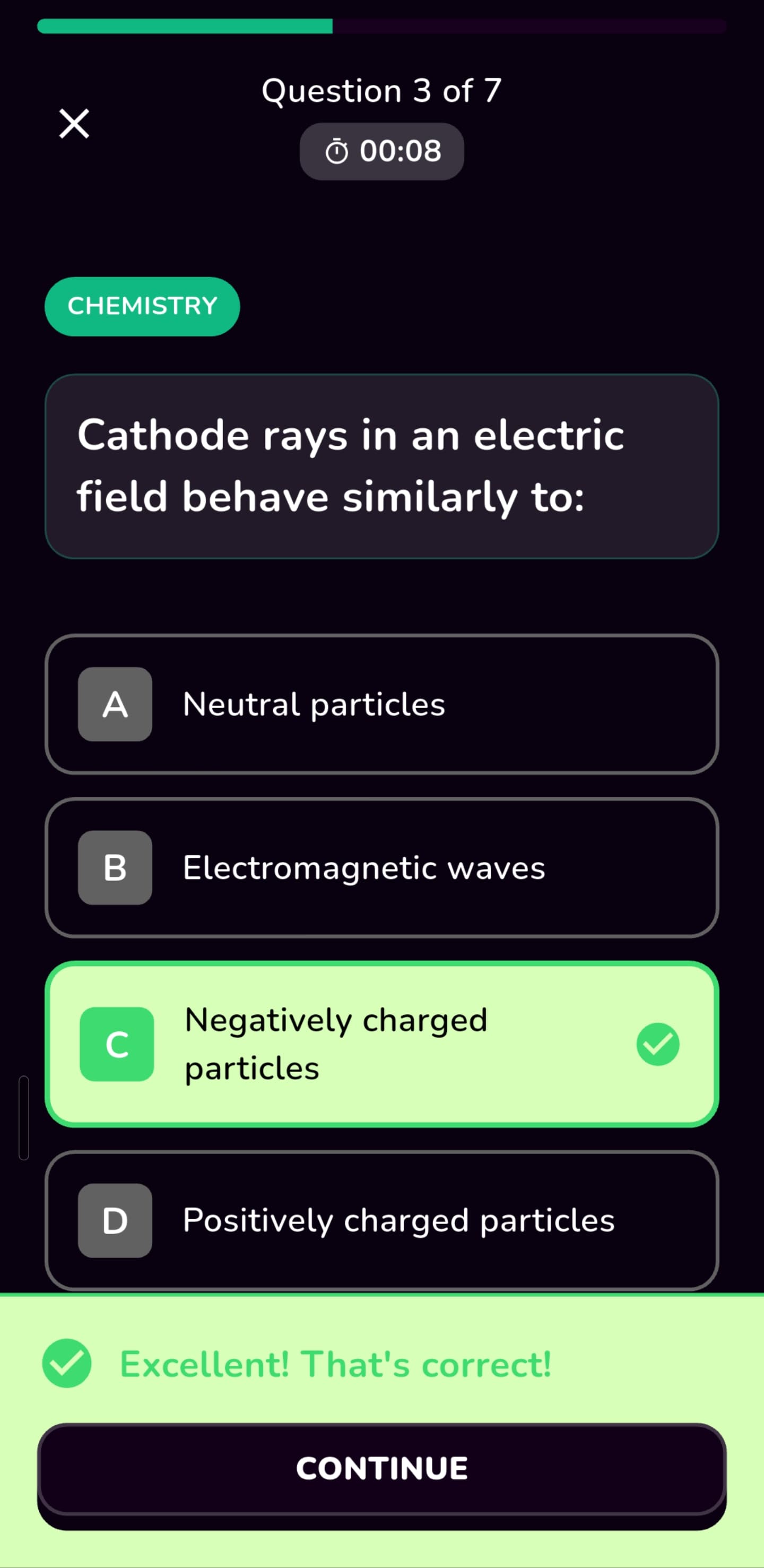
- PracticeTimed, until it sticks

Still stuck at 11pm? TarQPro reads the answer you got wrong and teaches the idea behind it, not just the right option.